












How to Fly an Airplane eCourse
NEW! How to Fly an Airplane eCourse – $79.00 (15+ Hrs.)
THIS COURSE INCLUDES THE ENTIRE “The Art of Takeoffs and Landings eCourse”
This eCourse meets all new 2026 ACS standards.
Complimentary downloads are available for this eCourse.
Lifetime access. All eCourses are always current.
You can view this eCourse on a PC, laptop, Mac, iPad, Android Tablet, or Smartphone. You can download eCourse videos to an iPad or Android tablet only for offline viewing.
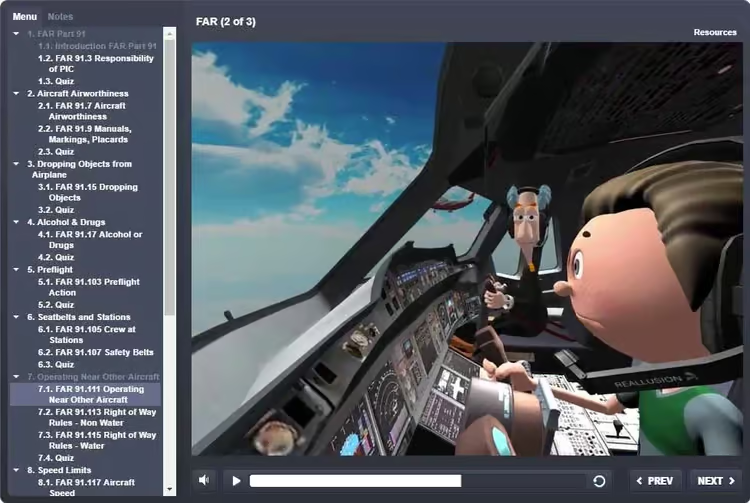
This 15-hour video-based, and highly-animated eCourse was entirely created by a flight instructor with 50+ years of training experience (no AI used here). It’s designed to do the one thing that other flying eCourses don’t do, and that is to provide you with a deep understanding of how we control an airplane in the air, during takeoffs, and while landing. This course is intended for those in primary flight training. It’s also intended to provide flight instructors with training in the art of teaching basic flying skills to their students.
There are several similar courses that do a wonderful job showing you an airplane in flight performing the maneuvers required to become a licensed private pilot. What’s often missing from these courses is a presentation of the aileron, rudder, elevator, and throttle skill set required to perform these maneuvers. Thus the reason for this eCourse. In this course I’ll show you the precise control movements needed to perform the basic and advanced flight maneuvers required for private pilot certification. And I’ll explain why the controls are manipulated in a certain way to achieve the desired outcome. In short, the skills and understanding you’ll acquire from this course will allow you to accelerate your learning progress during flight training.
Price = $79.00
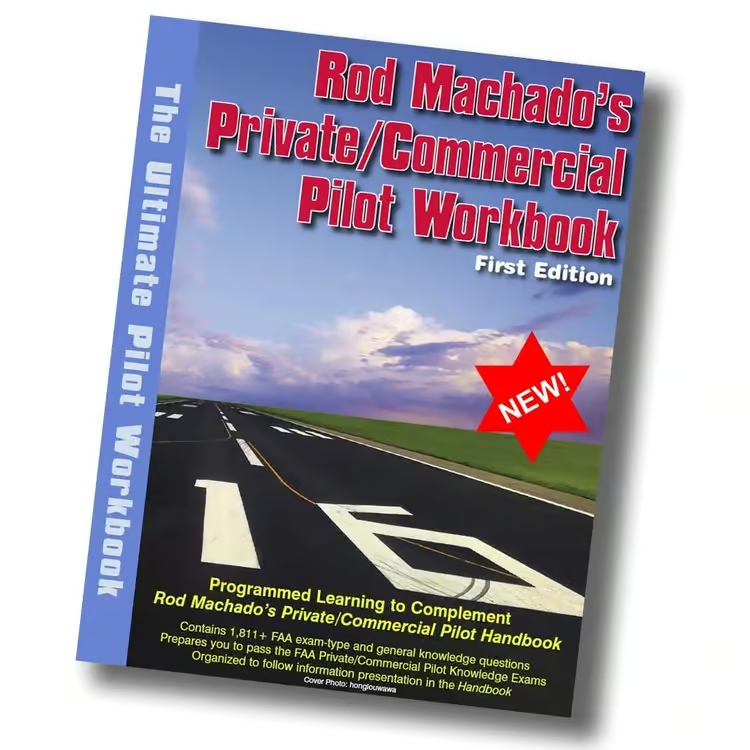
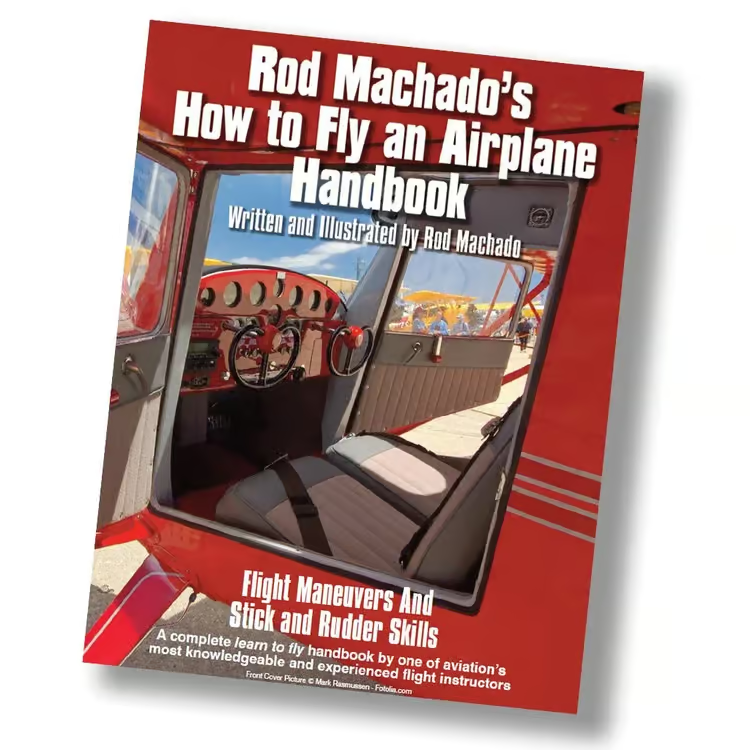
Visit Rod Machado Aviation Learning Center to purchase this exceptional book.
How to Fly an Airplane eCourse
Disclosure: As an affiliate, AvPay earns a small commission from qualifying purchases made through this link at no extra cost to you.
Description
1-Straight, Level, and Turning Flight
No Mystery History
Yoke & Pedal
Why Two Sets of Controls?
How to Hold the Controls
Webers Law
Body Parts
Sitting Height
Attitude Flying Principles
Straight and Level Flight
Flying on the Level
Trimming for Level Flight
Level Turns
How Much Rudder When Turning?
Where to Place the Controls
Technique-1: The Inclinometer
Technique-2: The Eyeballs
Technique-3: Seat of the Pants Flying
Three Types of Turns
Identifying Bank Angle
Determining Turn Pitch Attitude
Sidebar: Dihedral
Sidebar: How to Increase Lift in a Turn
Sidebar: Rotation About the Longitudinal Axis
Sidebar: Wing Speed Differential
2-Climbs and Descents
Climbs
Leveling Off From a Climb
Climbing Turns
Power-off Descents
Leveling Off From a Descent
Descending Turns
Descending and No Slipstream
Power-on Descents
More Than One Way to Descend
Descending at the Best Glide Speed
Gliding Into the Wind
Climbing in a Complex Airplane
Leveling Off in a Complex Airplane
Why Climb Rates Decrease with Bank Angle
Airplanes and Their Trimmed Airspeed
3-Slow Flight
Slow Flight Delight
Slow (Flying) Pilots at Work
Entering Slow Flight
Exiting Slow Flight
Control Response in Slow Flight
Slow Flight Turns
Maintaining Altitude in Slow Flight
Slow Flight at Minimum Airspeed
Climbing or Descending in Slow Flight
Slow Flight With Flaps Extended
Returning to Level Flight
Slow Flight With Flaps/Gear Extended
Power Applied vs Climb/Descent Rates
4-Stalls and Spins
What Is a Stall?
The Lift Equation
How, When and Where a Wing Stalls
A Few Ground Rules
The Stall, It’s a Ball
Recognizing the Stall
Imminent Stalls
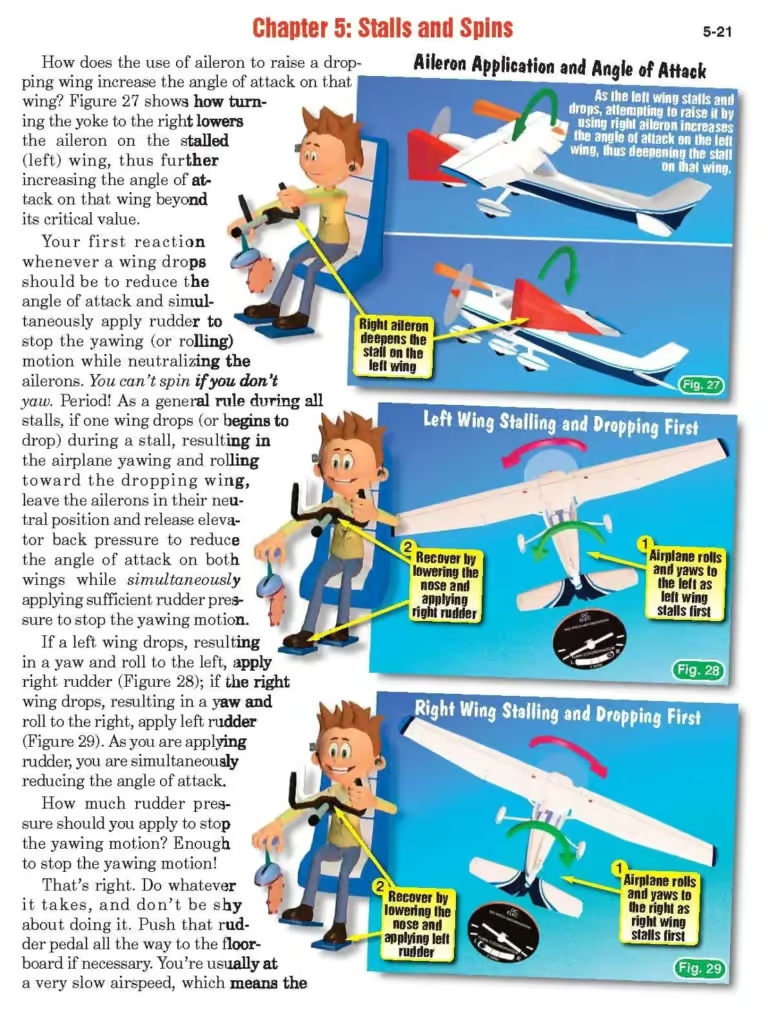
Use of Aileron/Rudder in Stall Recovery
Stalling While Turning
Stalling With the Nose Below the Horizon
Why One Wing Stalls First
Stall Characteristics Affecting an Airplane
Stalls With Flaps Extended
Stalling with Gear/Flaps Down
Departure (Power-on) Stalls
Departure Stalls in Complex Airplanes
Accelerated Stalls
Stalls and Cross-Controlled Flight
No Spin Talk on Spins
Preventing Entry Into a Spin
Spinning
Spirals vs Spins
Stalls, Spins and the Conditioned Reflex
Elevator Trim Stall
Applying Power During Stall Recovery
Stalls and Altitude Loss
The Complete Stall Recovery Procedure
Engine Power and Stall Speed
5-Ground Reference Maneuvers
A Wind-Wind Situation
Air Bullies
The Rectangular Course
Correcting for Wind Drift
Turns Around a Point
S-Turns Across a Road
Introduction to Steep Turns
Elementary Components
Enough Talk Let’s Do
Steep Turn Panel Illusion
Steep Turn Rudder Use
Steep Turn Course Reversal
Sidebar: Rate and Radius of Turn
6-Takeoffs and Climbs
The Big Takeoff Picture
The Trip to the Runway
Get Set
Take It Off—Take It All Off
Climb Attitude and Density Altitude
When To Raise the Landing Gear
Three “Engine Power” Combinations
Not Crossed Up by Crosswinds
The Effects of Ground Effect
Wingspan vs. Induced Drag
A Soft Spot For Soft/Rough Fields
Short Field Takeoff Demonstration
Soft Field Takeoff Demonstration
Rejected Takeoffs
Why Vx and Vy Change with Altitude
Preventing Serpentining
7-Approaching To Land
Approaching To Land
Getting Low, Getting Down
When Lift is a Drag
When To Turn Onto Base Leg
When To Begin Landing Descent
How Normal Patterns Aid in Landing
What To Do When Turning Base Leg
Finally Turning Final
Power-off Landings
The Stationary Spot
Normal Glidepath/Returning To Glidepath
Too Low/Too High On Final
Trapezoidal Runway Shape Change
The Simple Glidepath Evaluation Clue
What The Runway Shape Means
Glidepath Angles and Power Usage
The Elevator Instinct
Using Approach Speed Charts
8-The Roundout and the Flare
Why Ground Shy?
Sensory Rich Runways
When To Begin the Roundout
Sitting Height
The Sweet Spot
Where To Look When Flaring
How Fast To Flare
The Runway Expansion Effect
The Ultimate Flare Exercise
The Aft Elevator Pull
Proper Trimming
Sampling The Response
The Two-Handed Flare
Touchdown Spot View
Balked Landings
Porpoising, Floating…
Ballooning, Bouncing, Fanning
Landing A Taildragger
9-Crosswinds and Slips
The Crab Method
The Wing Low Method
A 25 Knot Direct Crosswind
Full Flaps Left Crosswind
A 10 Knot Direct Crosswind
Getting Nosey On Touchdown
Transitioning—Crab To Sideslip
The Really Big Guns
Flaps and Crosswind Landings
Weathervaning
Gusts in the Gusts
Getting Down By Slipping Down
Right or Left Slips?
The Slipping Turn
10-Advanced Landing Concepts
Short Field Approach
Short Field Landing—With Obstacle
Short Field Landing—No Obstacle
The Region of Reverse Command
Roundout and Flare On Short Fields
Short Field Demonstration
Soft Field Approach
Soft Field Landing
Soft Field Demonstration
Estimating Stall Speed With Flaps Extended
Approach and Landing In Bumpy Air
11-Pitch and Power Flying Concepts
Pitch and Power Introduction
The Flying Equation: A+P=P
Common “Formula” Mistakes
Flying The Wing
Fine Tuning Attitude With Instruments
The Five Attitudes
Constant Airspeed vs. Glidepath
Fixed Power Condition
Variable Power Condition
Pitch-Power Flying Techniques
Elevator-Airspeed Pilots
Which Technique to Use?
Frequently Asked Questions
Is there overlaps with other Machado eCourse products?
Yes. This eCourse contains the “Art of Takeoffs and Landings” eCourse.
How do I access this eCourse?
The eCourse is available online via your secure, password-protected account window. You can watch the videos on a Windows PC, Mac, iPad/Android tablet and iPhone/Android Phone.
Will my online access ever expire?
No. Once you register your login credentials, they will never expire. You will always have access to the program.
Can I view the lessons on my iPad or mobile device?
Yes, you can view this eCourse on a PC, Laptop, Mac, iPad, Android Tablet, or smartphone. You can only download eCourse videos to an iPad or Android Tablet for offline viewing.
Can I access this eCourse from more than one computer or device?
Yes—with your login info, you can access the site as often as you want.
Can I share this course with anyone else?
No. This eCourse is for you, not for others. It’s not to be shared with anyone else. If you have friends who want to use your eCourse, have them contact me for a bulk course discount. PLEASE DON’T SHARE THIS eCOURSE WITH ANYONE ELSE!
How do I know my computing device will play this eCourse?
Try the Demo link above. This course works on all devices. Nevertheless, I recommend that you use Chrome as your browser, not Safari, Firefox or anything else.
Does the course player remember where I left off?
Yes, it does. However, you need to clear the browser’s cache on occasion when your browser acts up. This also clears cookies, which are used to remember where you stopped. So treat this course as you would a book and make a note of where you left off before you clear the cache.
Can I obtain a refund if I am not happy?
If you’ve had this course for less than 10 days then contact me to discuss a refund. I cannot–CANNOT!–offer a refund beyond this stipulation.