

Home » Aircraft for Sale » Piston Helicopters for Sale
Piston Helicopters for Sale
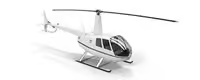
Find new and used piston helicopters for sale on AvPay, the premier global marketplace for commercial and general aviation. Search our comprehensive rotary aircraft listings for high-quality piston helicopters from leading manufacturers such as Agusta, Enstrom, Guimbal, Hughes, Robinson, Schweizer and more...
As a leading digital platform for rotary aviation procurement, our global inventory supports diverse ab-initio flight training, utility operations and personal cross-country mission profiles across the UK, Europe, the United States and beyond. Whether you are looking to purchase a personal light helicopter directly, source dependable training fleet additions through established aircraft brokers or connect with private sellers worldwide, AvPay seamlessly bridges the gap between buyers and versatile vertical-lift assets across the USA, North America, South America, Asia and Australasia. From highly efficient two-seat trainers to robust four-seat utility cross-country platforms, find your next vertical asset on a trusted marketplace built for international aviation professionals.










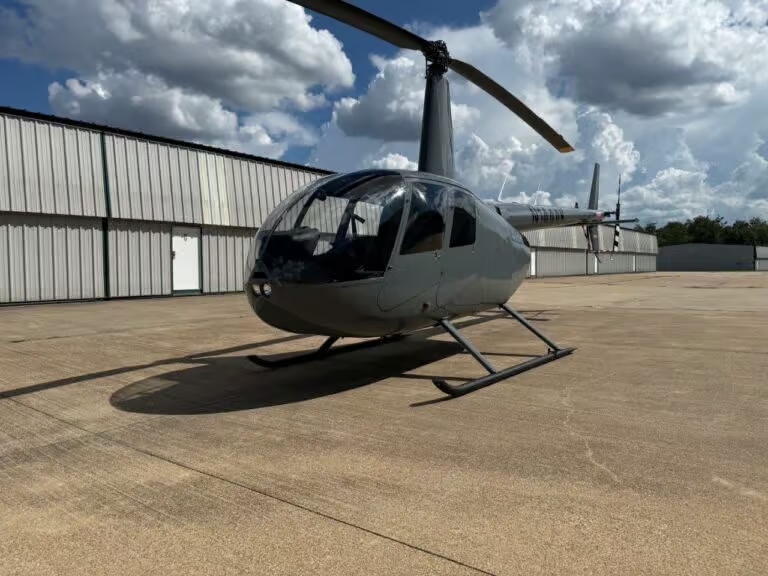 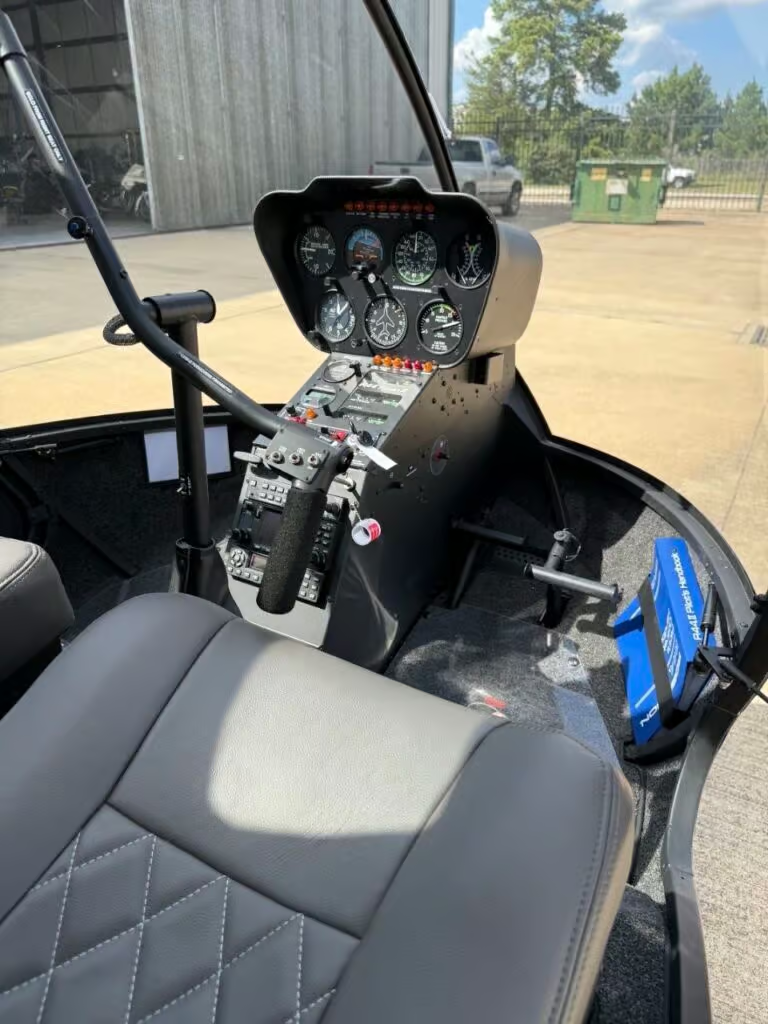 USD $ 550,000 PRICE REDUCED |
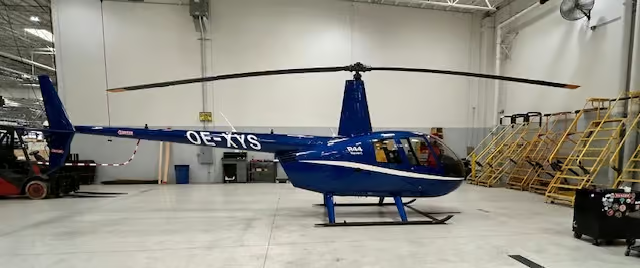 USD $ 560,000 PRICE REDUCED |
 USD $ 329,000 PRICE REDUCED |
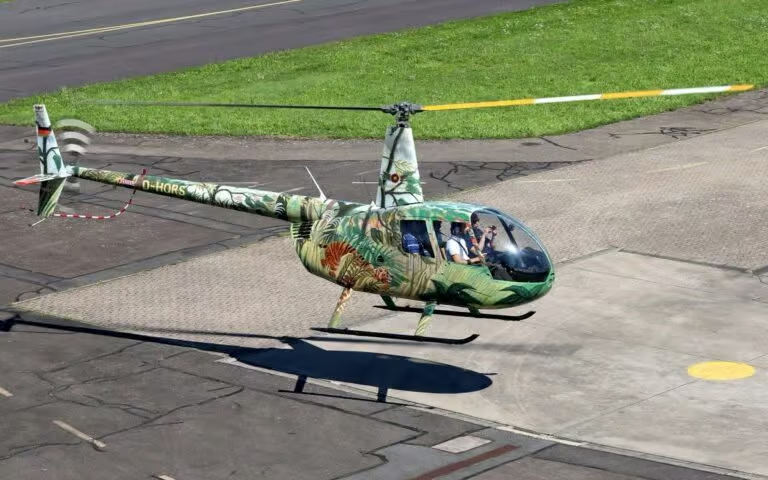
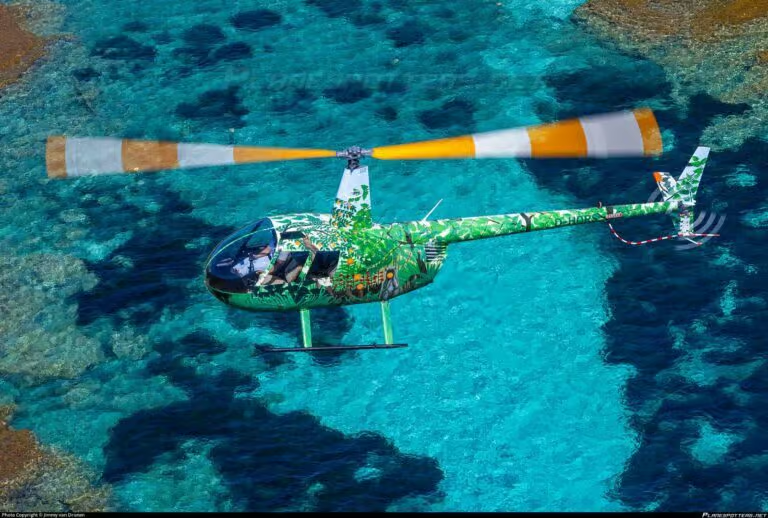
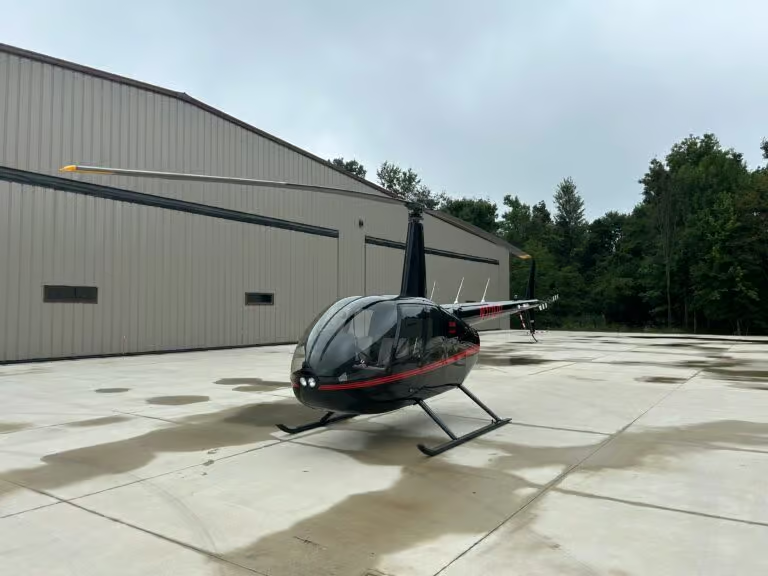
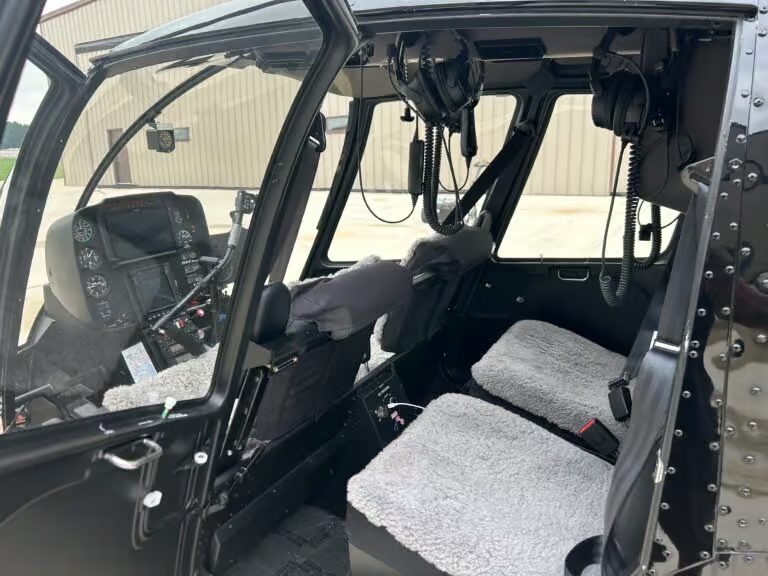
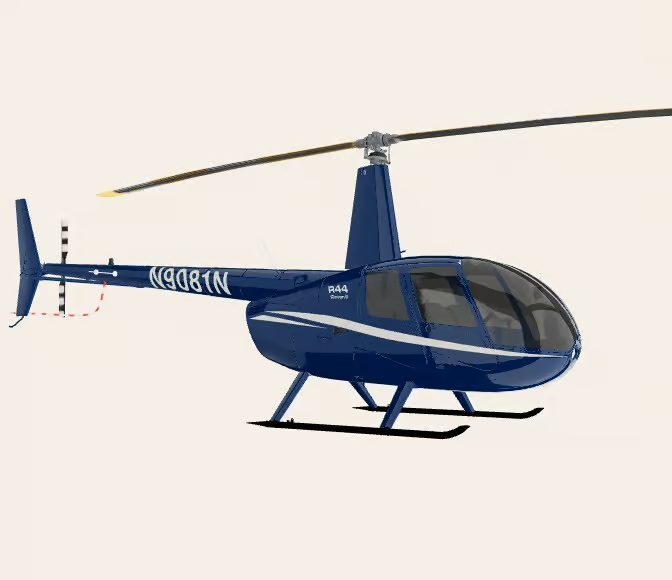
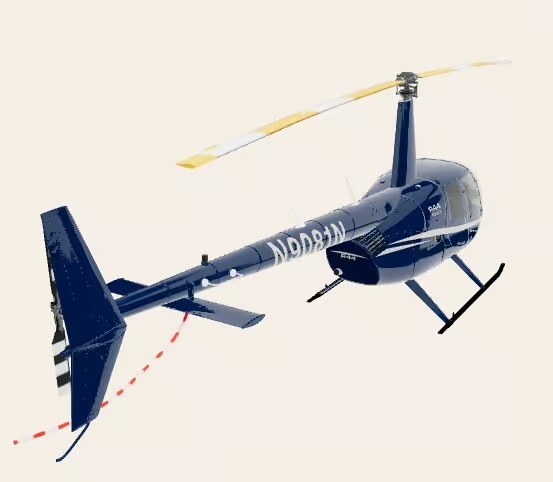
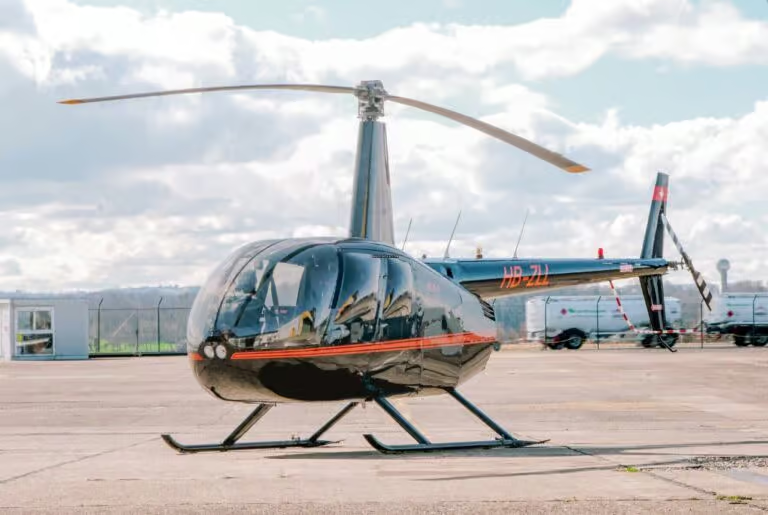
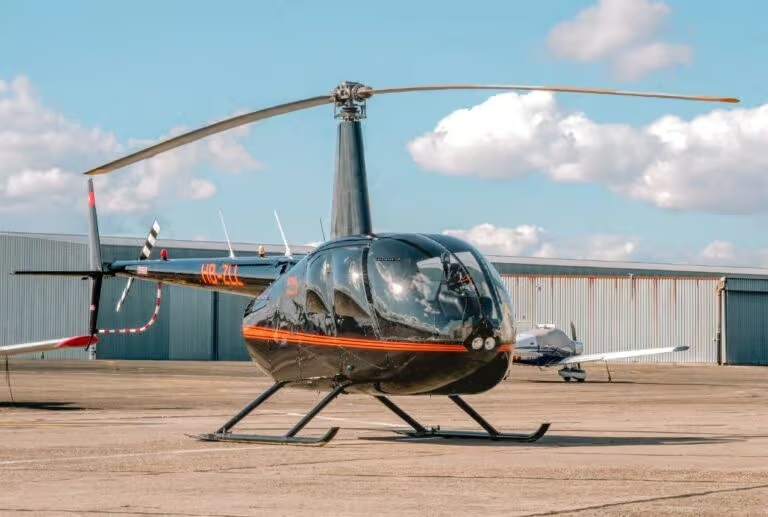
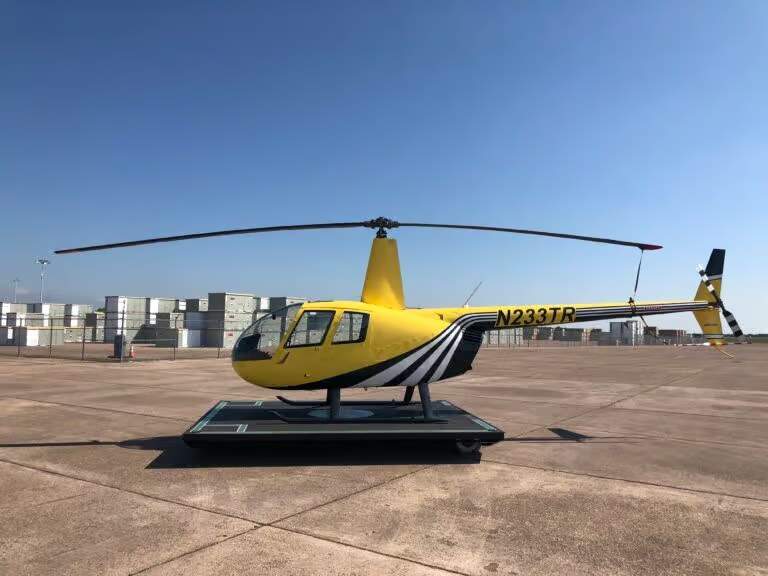
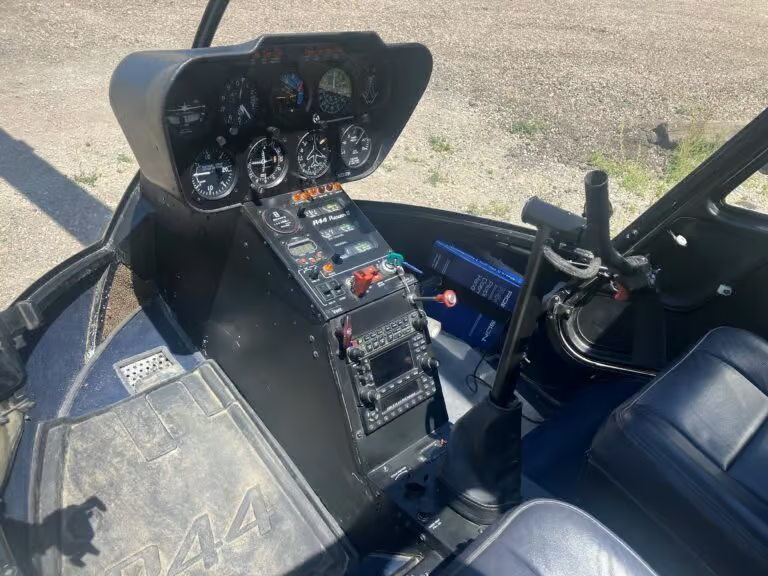
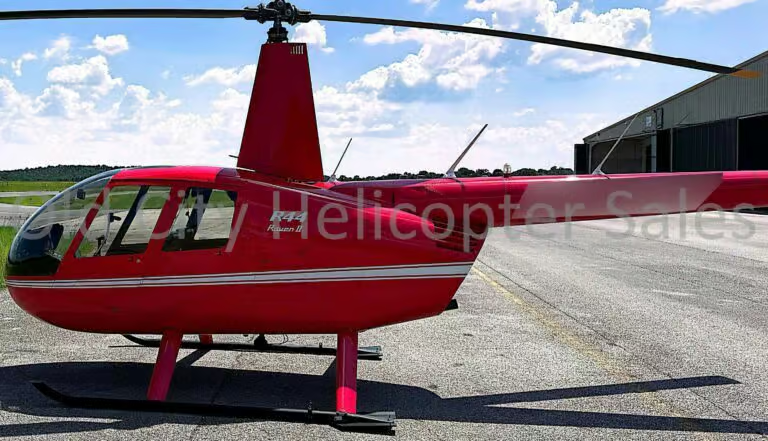
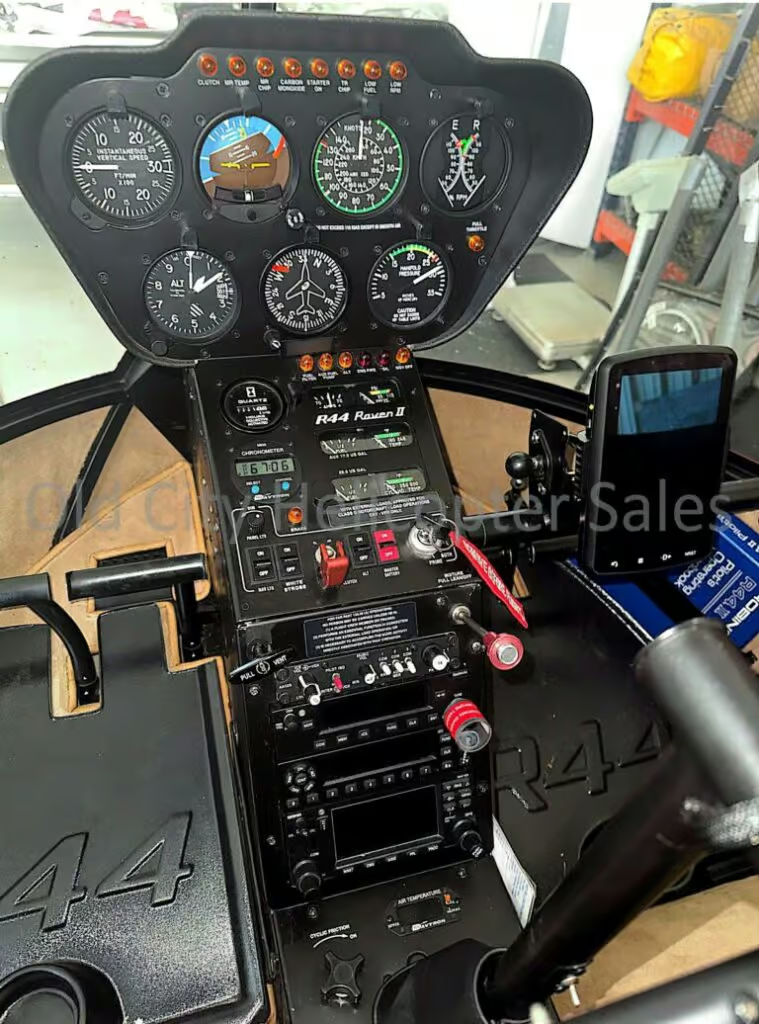



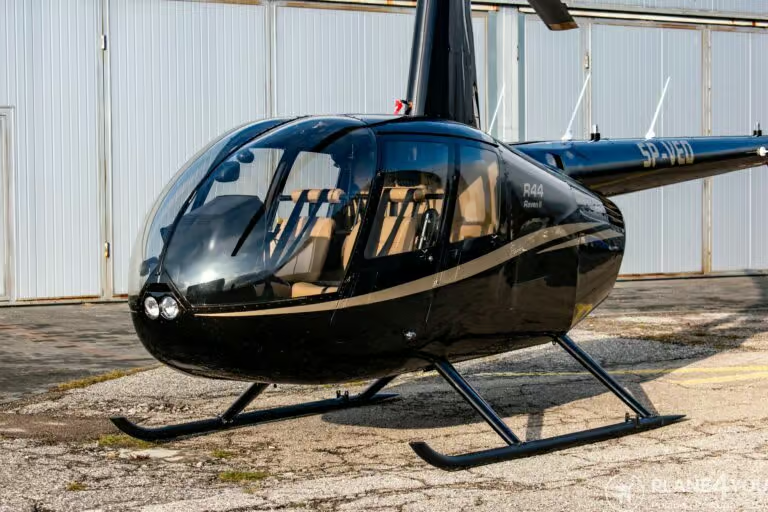

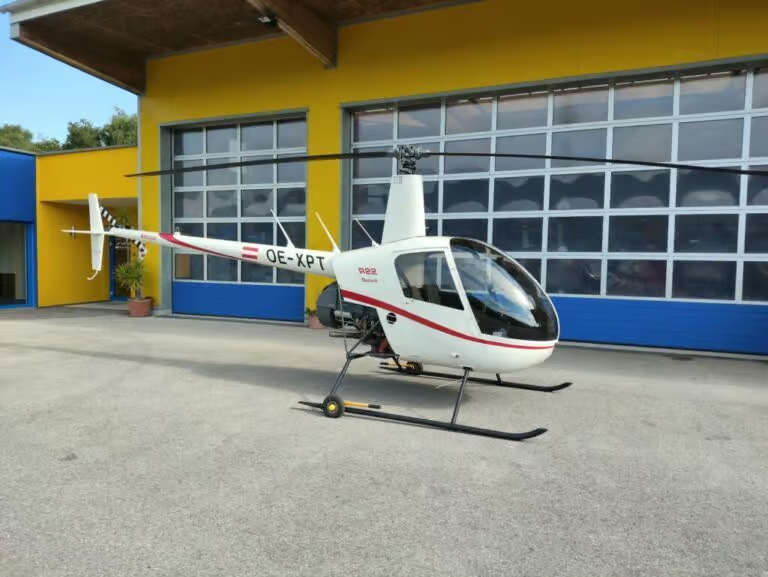
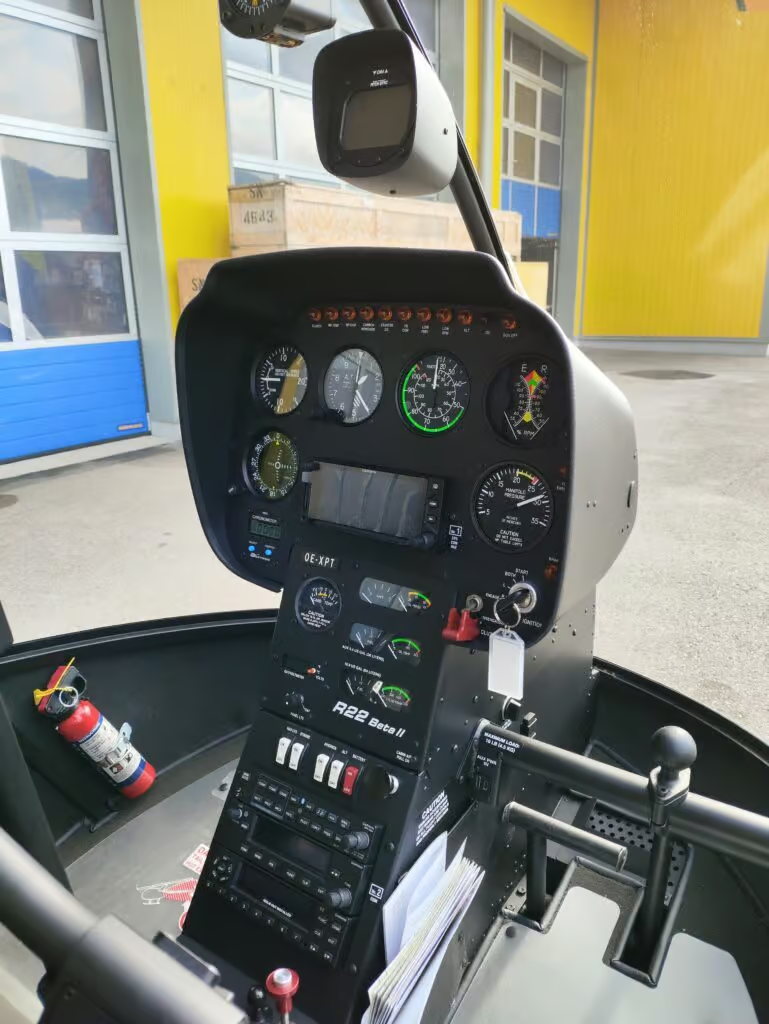
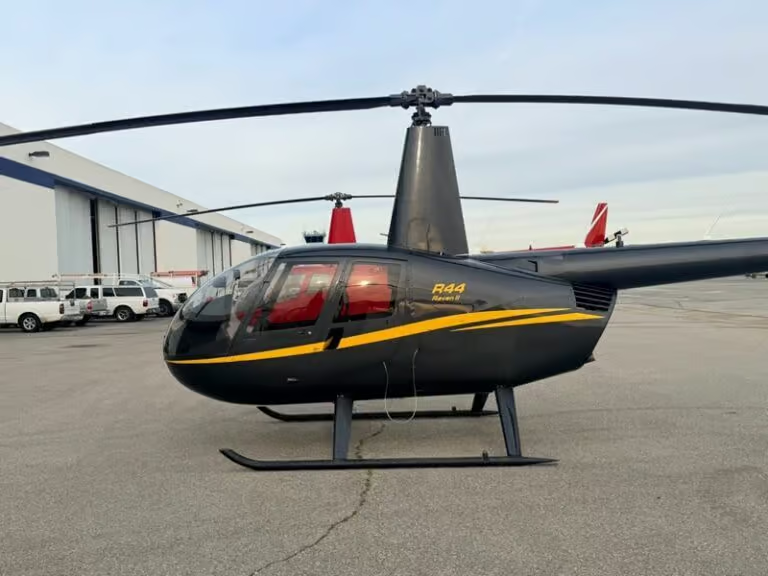
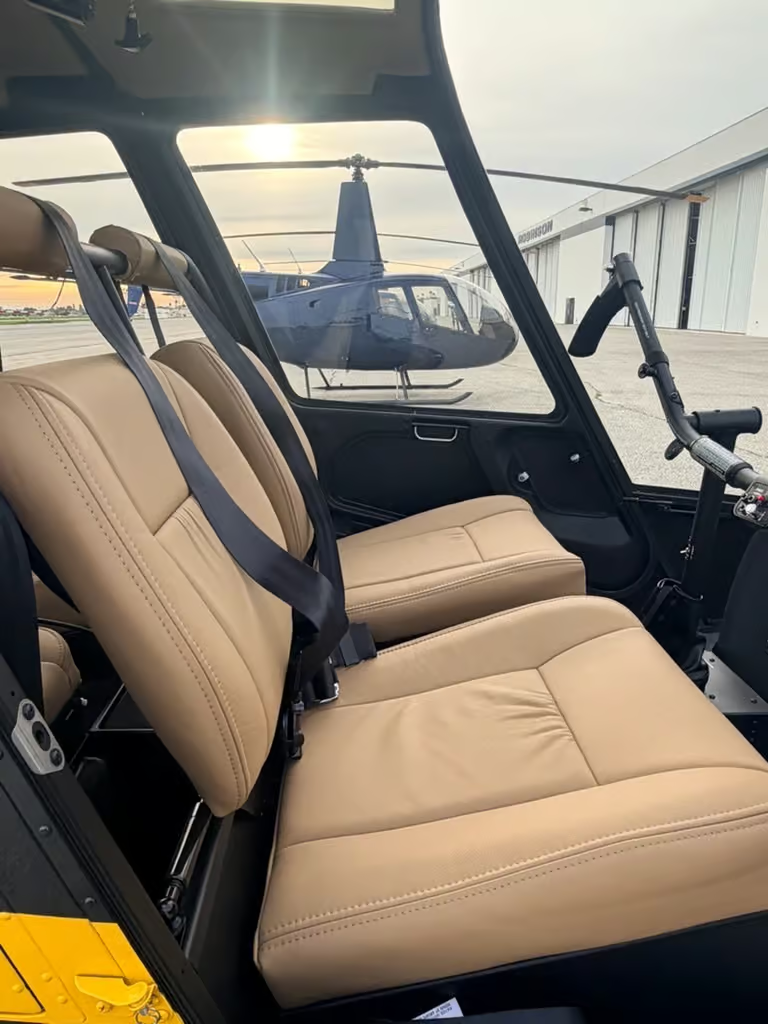
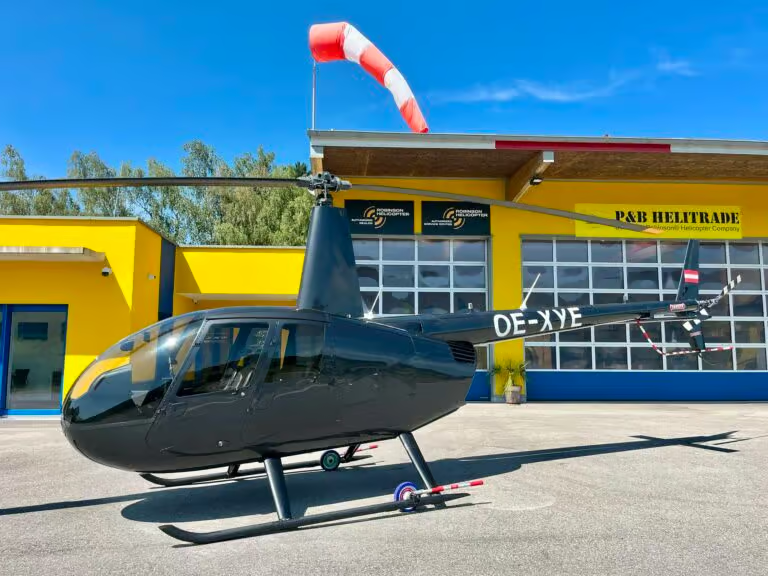
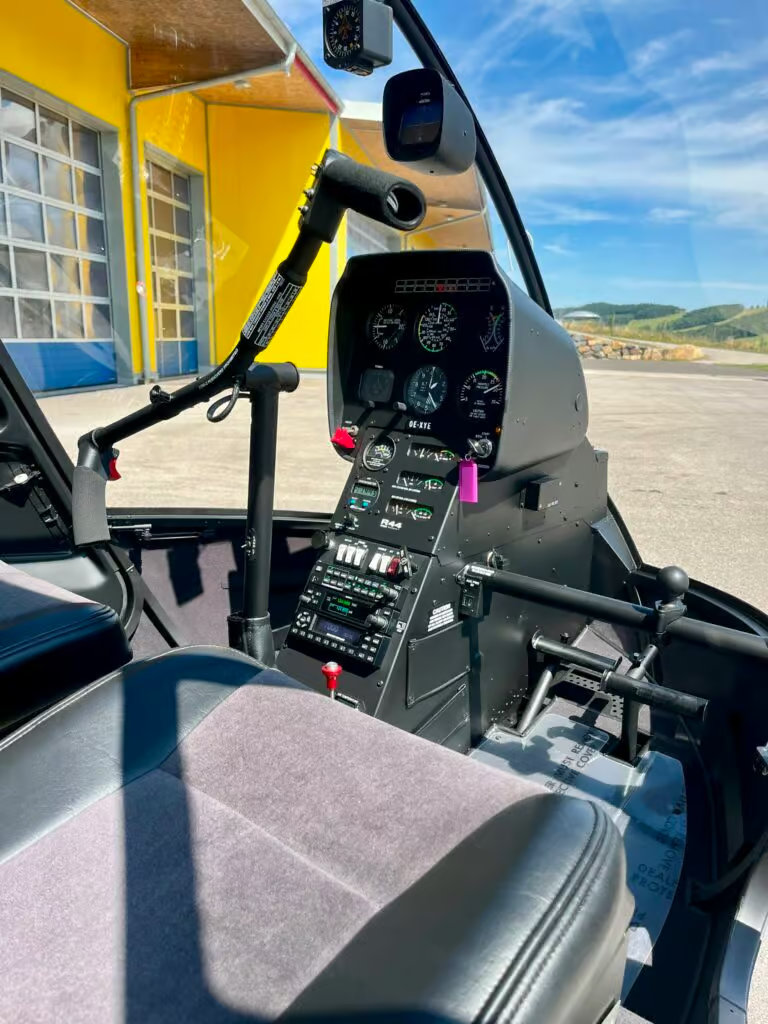
Find Your Ideal Piston Helicopter for Sale on AvPay
AvPay, the leading global marketplace for general and commercial rotary aviation, connects discerning buyers and sellers across the UK, Europe, North America, South America, Asia, Africa and Australasia. Our centralized digital network hosts an extensive, high-quality online selection of new and pre-owned piston-engine helicopters engineered for flight training, private touring, agricultural application and light utility missions.
Refine your rotary search parameters smoothly using our integrated filtering infrastructure. You can quickly isolate your ideal vertical-lift asset by filtering the marketplace by manufacturer, model, condition, year of manufacture, total time on airframe (TTAF), geographic location, price and seller.
As a prominent platform tailored to private pilots, rotary flight academies and commercial fleet operators, AvPay showcases a diverse range of piston-driven helicopters. Discover our complete selection of light rotary aircraft listed on this page, or browse all alternative aircraft categories and aerospace manufacturers here.
Once you locate a piston helicopter that aligns with your mission profile, connect instantly with the listing broker or private seller via WhatsApp, secure private message or phone to discuss technical specifications, maintenance track records, component times remaining, calendar inspections and pricing details.
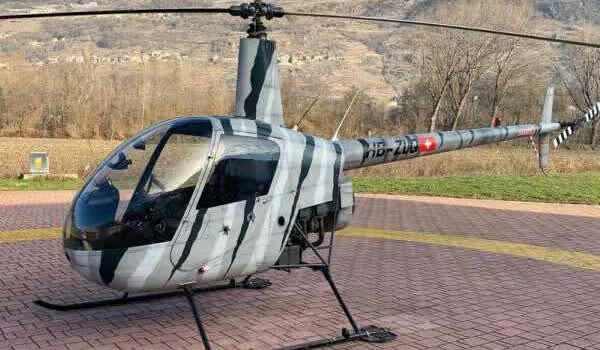
Why buy a Piston Helicopter For Sale?
✈ Outstanding Capital and Operational Affordability: Piston-engine helicopters represent a highly cost-effective entry point into rotary-wing ownership. Compared to turbine-powered alternatives, they deliver significantly lower initial asset purchase prices, reduced insurance premiums and highly predictable hourly running costs.
✈ Simplified Maintenance Lifecycles: Utilizing reliable, time-tested reciprocating powerplants, piston helicopters feature mechanical systems that are straightforward to maintain and repair. Sourcing replacement parts is highly efficient and regular routine maintenance can be conducted by most certified regional rotary engineers.
✈ Exceptional Mission Versatility: Light piston-driven helicopters provide remarkable operational utility. Their responsive handling dynamics make them the global standard for primary rotary flight training, point-to-point private cross-country touring, leisure flights and specialized low-altitude aerial work.
✈ Suppressed Hourly Fuel and Operating Costs: Built around efficient avgas or automotive-fuel powerplants, piston helicopters maintain exceptionally low hourly fuel burn rates. This economic efficiency yields significant long-term operational savings compared to the steep fuel demands of turbine platforms.
✈ Active Rotary Community and Camaraderie: Owning a light piston helicopter introduces you to a dedicated, supportive global rotary aviation network. Connect with fellow owner-operators, share complex routing strategies and participate in dedicated helicopter fly-ins, breakfast runs and regional club events worldwide.
✈ Absolute Personal Mobility and Freedom: Rotary ownership delivers unparalleled destination flexibility. Bypassing traditional runway constraints allows you to fly on your own timeline and land directly at private estates, localized heliports or off-field destinations with complete autonomy.
✈ Unmatched Low-Speed Flight Dynamics: Operating a piston helicopter unlocks a completely unique dimension of flight. The capacity to execute vertical take-offs, precision hovering configurations, slow-speed taxi maneuvers and tight area landings provides an exhilarating, highly practical aerial capability.
✈ Specialized Utility Applications: Thanks to their maneuverability and competitive operational margins, piston helicopters are perfectly optimized for specialized regional operations. They serve as exceptional tools for precision agricultural spraying, aerial photography, wildlife monitoring and pipeline inspections.
✈ The Universal Foundation for Rotary Training: Piston platforms serve as the universal training backbone for flight academies worldwide. Operating these responsive aircraft ensures student pilots develop precise muscle memory, rigorous throttle management habits and excellent fundamental aerodynamic skills.
✈ Fulfilling Aviator Hobby and Recreation: For dedicated enthusiasts, owning a personal light helicopter represents the ultimate aviation milestone. It offers an incredibly rewarding, immersive way to master complex flight controls while exploring regional landscapes from a completely unique perspective.
Piston Helicopters are ideal for
✈ Private Operators and Leisure Touring: Providing private owners with a highly agile transport solution, allowing for seamless point-to-point travel to hotels, golf courses and remote personal properties without airport restrictions.
✈ Ab-Initio and Advanced Rotary Flight Training: Serving as the global standard for student pilots working toward private pilot licenses (PPL-H), commercial pilot licenses (CPL-H) and professional flight instructor ratings.
✈ Light Commercial Aerial Work and Photography: Delivering a stable, highly maneuverable platform for capturing crisp high-definition video footage, real estate imagery, environmental surveying and livestock management tracking.
✈ Localized Public Service Support: Assisting regional emergency teams, local tracking groups and community volunteer search missions where the capacity to operate safely out of confined grass clearances is paramount.
✈ Small Businesses and Corporate Entrepreneurs: Supporting niche commercial ventures such as specialized aerial advertising, localized sightseeing tours and private executive charter services over regional routes.
✈ Industrial Property and Infrastructure Inspections: Providing utility firms with a cost-efficient vehicle for performing low-altitude powerline assessments, forestry protection surveys and pipeline integrity monitoring.
✈ Academic and Aviation Engineering Programs: Granting aerospace universities and maintenance colleges an accessible, mechanically transparent platform for practical, hands-on mechanical and technical training modules.

Get help buying Piston Helicopters
Can't locate the exact component times remaining, instrument flight deck setup or passenger configuration your rotary operations demand? Bypassing the current stock inventory list is simple. Contact an established aviation professional through our global Aircraft Broker Directory to initiate a dedicated search. Alternatively, explore tailored Aircraft Brokerage and Aircraft Acquisition Services via the marketplace to professionalize your next helicopter purchase.
For highly targeted or uncommon rotary specifications, you can also submit a bespoke request form. We will distribute your precise procurement criteria directly to our global networks of aircraft brokers and specialized helicopter dealers to help source premium off-market piston options matching your budget.
Sell your Piston Helicopters on AvPay
Maximise your market exposure by listing your piston helicopter on AvPay to engage qualified aviation buyers worldwide. Offering streamlined DIY options, our platform automatically updates and distributes your listings, publishing every new aircraft directly to our dedicated aviation social media channels and including them in our weekly email blast to put your assets in front of our audience of 190,000+ followers and subscribers.
For professional aircraft brokers, our dedicated broker packages feature unlimited listings with automated distribution, ranging from 1 month for $199, 3 months for $349, 6 months for $599, up to 12 months for $999.
For private single-aircraft sellers, our private seller options provide simple and affordable DIY plans to list one aircraft for either $25 for 1 month or $50 for 3 months.
With AvPay, you will not just generate inquiries on your core inventory. You will also build long-term digital authority through your aircraft broker profile and any additional service listings you include on our aviation marketplace pages. Let us streamline your remarketing efforts. List your Piston Helicopter on AvPay Today!
Piston Helicopters for sale on AvPay FAQ
Having the advantage over turbine helicopters, piston helicopters are the preferred choice in training, personal transportation and tourism missions, because they are economical to maintain, less expensive to operate and easier to fly. Considering the reliable reputation of the Alpi Alpine Syton, Bell 47, Enstrom 280 Shark, Hughes 269C, Robinson Raven II, R22 Beta II, and the Safari 400, these helicopters are ranked amongst the most popular piston helicopters available for sale on AvPay. They are enjoyable to fly, very affordable and with the latest advances and modifications made over the years, today’s piston helicopters available on the market are quieter and more adaptable than in previous years. New and used helicopters are listed on AvPay representing the buyer and the seller’s wishes making considerations and comparisons as easy as pie! View the latest piston helicopters for sale on AvPay.
A relatively smaller, modern helicopter with no more than five seating capacity and weighing less than 2,500 lbs (1,133kg) powered by a lightweight, fuel-efficient, and powerful piston (or reciprocating) engine comprising of four- or six-cylinders fuelled by Avgas (Aviation Gasoline).
The piston engine operates as follows:
First, the piston is drawn down into a cylinder by the crankshaft where the intake valve at the top of the cylinder opens, sucking in air and mixing it with fuel. The cylinder then rotates from the bottom back up in the cylinder where the intake valve closes, completely sealing the cylinder and compressing the fuel/air mix as the piston rises to the top. As the piston reaches the top of the cylinder, a sparkplug ignites the fuel/air mixture causing a tiny explosion rapidly expanding the increasing pressure that forces the piston back down in the cylinder. From the bottom of the cylinder the piston is then forced back up to the top of the cylinder. With the momentum of the crankshaft and the other cylinders firing, the exhaust valve opens to allow the dissipated gas to be discharged through the exhaust outlet, after which the exhaust valve then closes, ready for its next cycle.
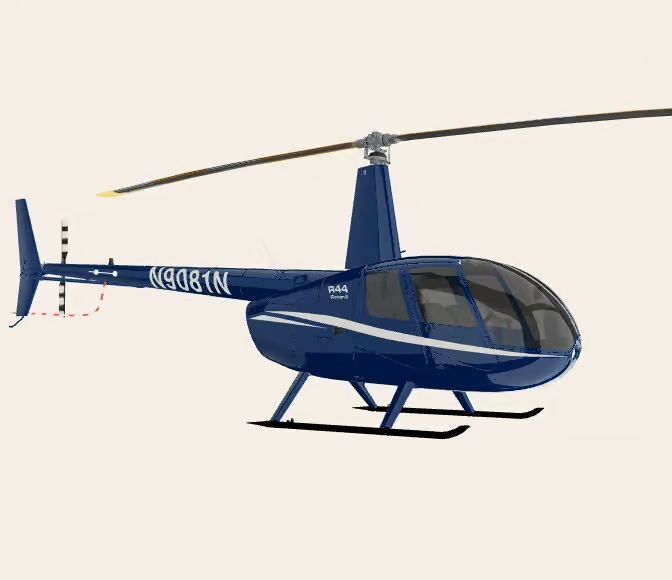
The Robinson R44 Raven II is equipped with a Lycoming IO-540 (derated to 245hp for take-off and 205hp for continuous flight) six-cylinder, fuel injected engine for the four-seater helicopter with a Max Gross weight of 2,500lbs (1,134kg)
Enstrom Helicopters utilizes the robust Textron Lycoming IO-360F1-AD turbocharged engine delivering 225shp and 167kW to power their three-seater Enstrom 280FX and F28F model helicopters with a gross weight of 2,600lbs (1,179kg).
Powering the Schweizer 300CBi three-seater (utility certified) is the Textron Lycoming HIO-360-G1A engine with a 180shp rating and a 134kw output to lift the Maximum Take-Off Gross Weight of 1,750lbs (794kg)
Guimbal Helicopters opted for the Lycoming O-360 180 hp (derated to 145shp) engine to power the Cabri G2 two-seater helicopter weighing at a max gross of 1,5,43lbs (700kg). This engine is certified for the use of unleaded Avgas or unleaded automotive gasoline.
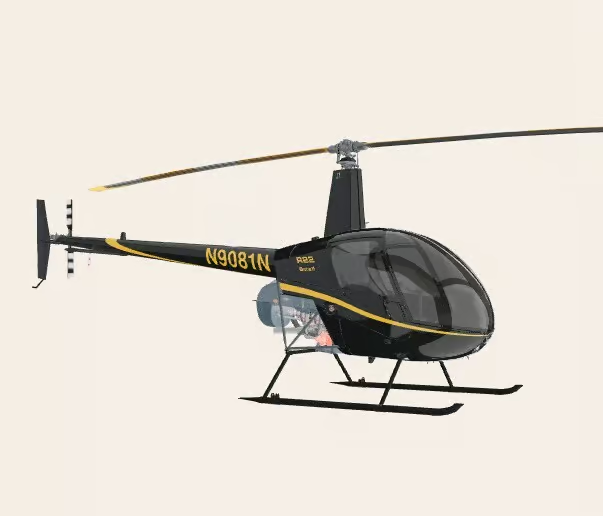
Leader in the helicopter training industry is the light-weight Robinson R22 Beta II weighing in at 1,370lbs (622kg) powered by the dependable Lycoming O-360, four-cylinder, carbureted engine that has been derated to 131hp for take-off and 124hp for continuous flight.
To answer this question, we have to consider that with turbine powered helicopters we are dealing with altitude pressure and temperature whereas with piston helicopters the power relies on the altitude density.
Piston engines are also known as reciprocating engines and are usually used in the smaller type helicopters, because they are cheaper to manufacture and maintain than turbine engines. The biggest difference is the result of atmospheric conditions on energy (power). In the piston engine the power available depends on the density of altitude and in the turbine engine the power available is dependent on pressure altitude and temperature.
In turbine engines, the air is sucked in through the air inlet before it enters the compressor. Most turbine engines are fitted with a particle separator that removes any foreign matter (sand/dust/tiny stones) that could cause damage to the compressor blades. As the air flows through the blades, it becomes more compressed, increasing the pressure and reducing its speed feeding the air into the combustion chamber. Fuel injectors inject atomized fuel into the combustion chamber where the air/fuel mixture is then ignited causing it to expand and forced through a series of turbine wheels, causing them to rotate. The spent fuel is then ejected from the engine through the exhaust system and released through the exhaust air outlet.
In most piston powered helicopters the pilot controls the engine rpm by means of the throttle on the collective. Power management in turbine helicopters is controlled through an electronic system more commonly known as FADEC (Full Authority Digital Engine Control) which controls the demand for power when collective changes occur.
Piston and turbine helicopters also use different fuels. Avgas (Aviation Gasoline) is mainly used in piston engines and is relatively inexpensive, whilst turbine engines consume JET-A1.
Turbine helicopters are also more expensive to maintain than piston helicopters.
In order to demonstrate the difference between piston and turbine helicopters, we shall be comparing Enstrom Helicopter’s F28F and 408B models.
The F28F is fitted with a Lycoming HIO-360-F1AD turbocharged engine and has a fuel capacity of 40 US Gallon (151l) and an estimated direct operating cost of $211 per hour. It measures in at a height of 2.7m (9.0ft) and width of 2.2m (7.3ft). With a seating capacity of up to three people, the F28F can reach a range of approximately 229nm (424km) and an endurance of around 3.5 hours.
Flagship 480B is fitted with a Rolls-Royce 250-C20W turbine engine and has a fuel capacity of 90 US Gallons (341l) and an estimated direct operating cost of $342 per hour. Standing taller than the F28F the 480B measures in at 3m (9.7ft) and is also slightly wider at 2.4m (8.0ft). The 400B seats up to five people, can reach a range of approximately 370nm (685km) and an endurance of around 4.7 hours
GAMA (General Aviation Manufacturers Association) released the figures of the new piston helicopter deliveries for the first quarter of 2022 in May, with Robinson taking the lead with the most deliveries of 36 units in total.
Robinson R44 Raven II (19 Units Sold)
The Robinson R44 Raven II has been the world’s best-selling general aviation helicopter since production started in 1992. The Robinson R44 Raven II is derived from the two seater Robinson R22, adding two additional seats, a more powerful Lycoming IO-540-AE1A5 fuel injected six cylinder engine and wider main rotor blades, improving altitude performance and increased gross weight.
Robinson R44 Raven I (12 Units Sold)
Significantly less expensive than the Robinson R44 Raven II, the Robinson R44 Raven I is fitted with a Carbureted Lycoming O-540 engine and although it offers a slightly diminished payload, it features carburetor heat assist which automatically adjusts carburetor heat, reducing pilot workload.
Robinson R44 Cadet (2 Units Sold)
With the same airframe, engine and rotor system, the Robinson R44 Cadet’s aft compartment has been refigured to accommodate cargo instead of people, the maximum gross weight has been reduced to 2,200lbs (997kg) and the engine power derated to 210hp on take-off and 185hp continuous.
Guimbal Helicopters Cabri G2 (3 units sold)
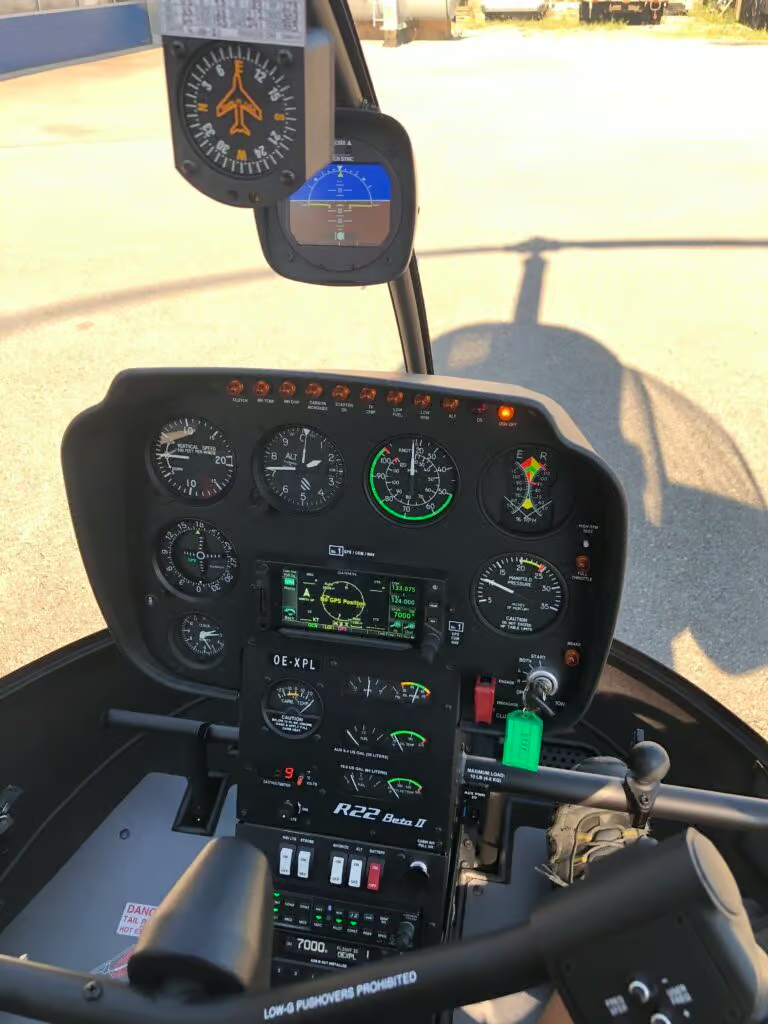
The brainchild of Bruno Guimbal (a former Eurocopter engineer) this two-seat light helicopter packs a big punch for such a small rotorcraft! The ground-breaking Guimbal Cabri G2 helicopter is the first piston-engine helicopter to feature a glass cockpit with an all-in-one digital flight display system and also the first to make use of the plasma ignition system. A storage compartment behind the cabin seats has a widow, providing for easy in-flight access.
The Guimbal Cabri G2 is powered by the Lycoming O-360 piston engine rated at 145hp (producing 108kW) at max continuous power and able to cruise at a speedy 90kts (166km/h) offering a range of up to 377nm (700km). Instead of the skids being directly bolted onto the fuselage, the Guimbal Cabri G2 utilizes elastomeric mounts providing greater articulation and reduction in ground resonance.
Robinson R22 Beta II (3 Units Sold)
Since production started on the Robinson R22 in 1979, this two seater helicopter has been domineering the helicopter training segment for over forty years! Known for its affordability, excellent performance and adaptability, the Robinson R22 Beta II is also used for livestock management and game capturing. The Robinson R22 Beta II is powered by a Lycoming O-360 engine that has been derated to 131hp for take-off and 124hp for continuous flight.
The Top five Piston Helicopters based on their altitude performance ranking from the lowest to the highest HIGE (Hover Into Ground Effect) and (Hover Out of Ground Effect).
- Robinson R22 Beta II
Powered by the Lycoming O-360 with a 180hp derated to 131hp, it has a MTOW of 1,375lbs/634kg, a HIGE of 9,400ft and HOGE of 7,500ft. - RotorWay A600
Powered by a RotorWay RH 600T engine with a 168hp rating, it has a MTOW of 1,500lbs/680kg, a HIGE of 9,000ft and HOGE of 7,500ft. - Safari Helicopters 400
Powered by the Lycoming IO-360 engine with a 180hp rating, it has a MTOW of 1,650lbs/750kg, a HIGE of 7,000ft and a HOGE of 5,000ft. - Schweizer 300C (Formerly known as Hughes)
Powered by the Lycoming HIO-360-D1A engine with a 190hp rating, it has a MTOW of 2,050lbs/930kg, a HIGE of 6,000ft and a HOGE of 4,000ft. - Guimbal Cabri G2
Powered by the Lycoming O-360-J2A engine with a 145hp rating, it has a MTOW of 1,540lbs/700kg, a HIGE of 5,000ft and a HOGE of 3,500ft.
The feisty Guimbal Cabri G2 is the leader of the pack when it comes to range capability, reaching up to 377nm/700km. Travelling over such a distance quite comfortable due to the larger than usual cabin, constant airflow through ergonomic air vents and excellent visibility. The Guimbal Cabri G2 is a two seater side-by-side configurated helicopter that is powered by a Lycoming O-360-J2A piston engine.
Schweizer’s 300C utility/training helicopter fitted with Lycoming HIO-360-D1A has a range of 374nm/694km, making it the helicopter with the second farthest range. In training configuration, the rotorcraft has a seating capacity of two, while in the utility configuration the pilot can be accompanied by up to two passengers.
Third in line we find the trio of Robinson R44’s comprising of the Raven R44 Raven II, Raven R44 Raven I and R44 Cadet. Although powered by different Lycoming engines, all three helicopters have an approximate range of 300nm/550km. Mr. Frank Robinson knew what he was doing when he created this diversity of helicopters to cater to a multitude of missions. With exception of the Robinson R44 Cadet (mainly used for training, being a two seater with additional space for cargo), the Robinson R44 Raven II and Raven I can seat a pilot and up to three passengers.
Fitted with a Lycoming HIO-360F1AD engine the Enstrom F28F comes in at fourth place with a range of 229nm/424km when operated at the excellent altitude of FL3,000ft (Flight Level) (with no reserve) it is mainly used for private use, helicopter pilot training, commercial and agricultural purposes and law enforcement.
Beating the Magni Gyro M24C ever so slightly (225nm/416km) for the last placement – but not the least on this list - is the Robinson R22 Beta II with a range of 250nm/463km. As one of the most reliable light helicopters with over forty years proven in operation, the Robinson R22 Beta II has stood the test of time.
The pricing of a pre-owned helicopter is dependent on the overall condition of the rotorcraft, maintenance history, damage history, additional equipment and avionics installed. New aircraft are priced at a Base Aircraft Price that does not include additional equipment, customized paint, interior, and additional avionics installed.
As the only four seater piston rotorcraft, it does not boggle one’s mind that the Robinson R44 is the one of the most expensive options available with a Base Aircraft Price of $465,000. Starting from nearly $530,00 for a low model, high-end option helicopter down to a low of $353,000
Second of the most expensive single piston helicopters in this world, the Schweizer 300C with its longstanding design, high safety record and reputation for extreme manoeuvrability, weighs in at an Aircraft Base Cost of approximately $463,000 which includes priced optional extras, with pre-owned options ranging from $138,000 for a late model 1970’s rotorcraft up to $493,000 for a recent model factory new option with most of the trimmings.
Considering that the Guimbal Cabri G2 features cutting edge technology such as the three blade fully articulated main rotor blades, Fenestron-type tail rotor, extensive safety adjustments and state-of-the-art all-encompassing glass cockpit display, the Base Aircraft Price of $395,000 (excluding optional equipment and avionics) is most certainly justified in second place! Pre-owned, the Guimbal Cabri G2 can be acquired from anywhere between $370,000 up to $400,000 with the latter being exceptionally spec’d out.
As the world’s most economical light helicopter, the Robinson R22 Beta II is offered at a Base Aircraft Price of as little as $314,000. For used Robinson R22 Beta II helicopters you can expect to fork out anything between $60,000 up but not limited to $324,000, depending on your needs and expenditure.
The Safari Helicopters RotorWay A600 does not disappoint in terms of acquisition costs. Offered as a kit to be assembled by the owner, a Base Aircraft Price of $150,000 is not understated if you consider that the new owner is not billed for any assembly hours. RotorWay does offer the option to purchase the aircraft in four stages, though. Used, there are no offerings available as of yet.
Robinson Helicopters is the only manufacturer that currently produces four seat piston helicopters, offering the Robinson R44 range that is powered by Lycoming piston engines. With exception of the Robinson R44 Cadet, the Robinson R44 Raven I, II, Clipper I and II, these rotorcraft are all configured in a four seating arrangement. Robinson also produces the extremely popular two seater Robinson R22 Beta II that is mostly used for helicopter training, game capturing and other light missions.
Depending on the mission of the helicopter, the Schweizer 300C can accommodate a pilot and two of their passengers for normal or pleasure flights. For training purposes, the aircraft is only certified for two and may only be occupied by the student and instructor.
The Robinson Family is closely followed by the Enstrom F-28F which is certified as a three seater in utility operation and as two seater when utilized as a training helicopter.
Guimbal Helicopters manufactures the Guimbal Cabri G2, a two-seat helicopter in side-by-side configuration. The passenger seat is removable for increased space in the cabin.
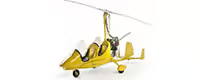
The Magni Gyro M24 Orion is an autogyro helicopter that is produced in France and offers side-by-side seating for the pilot and one passenger. The Magni Gyro M24 Orion is powered by the Rotax 914ULS engine, is fun to fly and mostly utilized for pleasure flights.
With a reputation of one of the most versatile helicopters, the Schweizer (formerly known as Hughes) 300C has an empty gross wight of 1,100lbs/499kg delivering a payload of 950lbs/430kg. The Schweizer is able to transport at least one hundred sacks of potatoes, or the equivalent of two large pigs.
Frank Robinson created one of the most popular four seater helicopters in the world. The Robinson R44 Raven II has an empty weight of 1505lbs/683kg with a gross weight of 2,500lbs/1,1134kg and a payload of 994lbs/450kg payload. The Robinson R44 Raven II is able to carry the weight of a grand piano, although it would not fit into the Robinson R44 Raven II. Luciano Pavarotti would not be able to serenade any audience accompanied by the piano in cargo!
The Robinson R44 Raven II is powered by a fuel injected Lycoming IO-540-AE1 fuel injected engine with an empty weight of 1,505/683kg, gross weight of 2,500lbs/1,134kg and a payload of 994lbs/450kg or the equivalent of two heavily set Landrace pigs!
Robinson Helicopters also manufactures the Robinson Raven I which is fitted with Lycoming O-540 engine that has been derated to 210hp. Extraordinarily, the R44 Raven I is capable of lifting an astonishing 773lbs/351kg of useful load.
Enstrom’s pride and joy piston production helicopters must be the F28F that delivers a payload of 765lbs or 346kg, the equivalent of a baby hippopotamus. The Enstrom F28F offers an empty weight of 1,640lbs/757kg and a gross weight of 2,600lbs/1,176kg.
The Robinson Clipper I is just a Robinson R44 Raven I fitted with fixed or pop-up floatation gear that provides additional safety when flying over water. Although it has a slightly less empty weight it still has a useful load of 723lbs or 328kg when operating with standard fuel.
Typically, the fuel efficiency of a helicopter is measured in gallons per hour. For everyone’s convenience, we have taken the liberty to add litres, too.
As one of the world’s largest producers of kit helicopters, the RotorWay A600 features high quality, affordability, and low operational cost in terms of fuel with the RotorWay A600 burning an economical average of 8 Gallons (30 litres) per hour.
As one of the world’s most trusted and most popular helicopter aircraft, the Robinson R22 Beta II has not only proven reliability, but also cost effectiveness with a fuel consumption of 8 Gallons (30 litres) per hour.
Schweizer has proven to be a market leader in the light helicopter market sector and forever improving their product, the Schweizer 300C proves its frugality at the usage of a mere 9 Gallons (34 litres) per hour
Recognized worldwide as the leading modern two-seater light helicopter in the world, the Guimbal Cabri G2 operates with a fuel burn of 10 Gallons (38 litres) per hour.
As the only four-seater piston helicopter readily available on the market, the Robinson R44 Raven II uses a remarkable 12 Gallons (45 litres) compared to the two/three seat variants that is currently on offer.
Although all aircraft manufacturers adhere to the most stringiest of safety rules and go far and beyond to not only meet, but endeavour to exceed safety requirements and regulations, accidents unfortunately do happen.
Guimbal Helicopters are also manufacturers that puts safety first. From the 63 accidents we could find, only nine fatalities were recorded from April 2010 until July 2022, bringing it to one fatality a year of a span of twelve years. Those are some seriously safe numbers compared to the Guimbal Cabri G2’s competitors!
Up to date Enstrom is one of the leading manufacturers that can boast with a reliable safety record with the least fatal accidents per 100 registered rotorcraft.
There are only a few fatal accident reports involving Schweizer Helicopters, the most famous accident involves country singer legend 50 year old Troy Gentry. On September the 8th 2017, Gentry and his pilot were on a sightseeing flight over Medford, New Jersey in a Schweizer 269C light helicopter when the aircraft unfortunately crashed.
The same can be said for the RotorWay A600 designed and produced by American RotorWay Helicopters from Chandler, Arizona. Very few fatal accidents have been recorded, cementing their claim of one of the safest helicopters manufactured in today’s day and age.
The Magni Gyro M24 Orion is produced in Italy, a side-by-side two seater autogyro also has the least recorded fatal accidents. The Magni Gyro M24 Orion is most popular for its attractive, spacious cabin with scenic windows and advanced avionics.
Robinson Helicopters are the only manufacturer producing four seater piston helicopters. The Robinson R44 Raven II and Robinson R44 Raven I both deliver excellent performance at 130kts/240km/h top speed and a cruising speed of 109kts/202km/h at Maximum Gross Weight. However, the Robinson R44 Raven II is powered by the Lycoming O-540-AE1A 260hp fuel injected engine, whilst the Robinson R44 Raven I is powered by the Lycoming O-540 carburated engine which has been derated to 210hp.
Also forming part of the Robinson family is the Robinson Clipper I with a top speed of 108kts/200km/h and a cruise speed of up to 106 kts/196km/h at Maximum Gross Weight.
Delivering up to four hours of endurance the two seater Magni Gyro M24C Orion is powered by the Rotax 914ULX engine, cruises at an optimal speed of between 64kts/120km/h and 80kts/150km/h.
Sleek and sexy, the very versatile Enstrom F28F is powered by the Lycoming HIO-360F1AD 225 hp engine with a max speed of 102kts/189km/h.
Being party of a dynasty of a helicopter family, the Robinson R22 Beta II is fitted with the Lycoming O-360 four cylinder carburated engine, capable of a max speed of 102kts/189km/h.
Since founding the Robinson Helicopter Company, Frank Robinson has pioneered the destiny of the piston helicopter, cementing its longevity forever. Since the development of the two seating trainer Robinson R22 Beta II, Robinson Helicopter Company has gone on to develop the R44 range that includes the R44 Raven I, II, Robinson R44 Clipper I, II and the trendsetting Robinson R44 Cadet. In 2011 Robinson Helicopters started the full production of the Robinson R66 Turbine.
Bruno Guimbal started designing and developing what we know as the Guimbal Cabri G2. Former engineer for Eurocopter, Bruno Guimbal envisioned a safer, state-of-the-art training helicopter that could also be utilized for fun and pleasure flights. The Guimbal Cabri G2 boasts a lot of firsts for helicopters in a similar class. The Guimbal Cabri G2 was the first twin seat reciprocating engine helicopter to be certified in the world. The Guimbal Cabri G2 is the first in its range to offer a fully digital glass cockpit, along with numerous standard safety options.
Formerly known as Hughes, the current Schweizer has been in production for over fifty years. The Hughes 296C was renamed as the Schweizer 300C. The Schweizer 300C is powered by a Lycoming HIO-360-D1A engine producing 190hp. The main rotor blades have been increased in diameter (26ft 10in opposed to the 25ft 4 in). With the larger engine and rotor blades, a 45% performance increase over the 269-series helicopters has been achieved.
Mining engineer Rudolph J. “Rudy” Enstrom initially founded R.J. Enstrom Corp in 1959 based at the Menominee-Marinette Twin County Airport in Michigan, United States. It would later become the Enstrom Helicopter Corporation. Today the Enstrom produces three models of light weight helicopters; two piston version helicopters and a four seater turbine version named Enstrom 400B.
RotorWay International based in Chandler, Arizona produces a kit plane two seater helicopter named the A600. The RotorWay A600 features a shaft-driven tail rotor, taller and longer skids and a re-designed turbocharged RotorWay RI 600S engine.