













New BRM Aero Bristell B23 Energic Aircraft For Sale
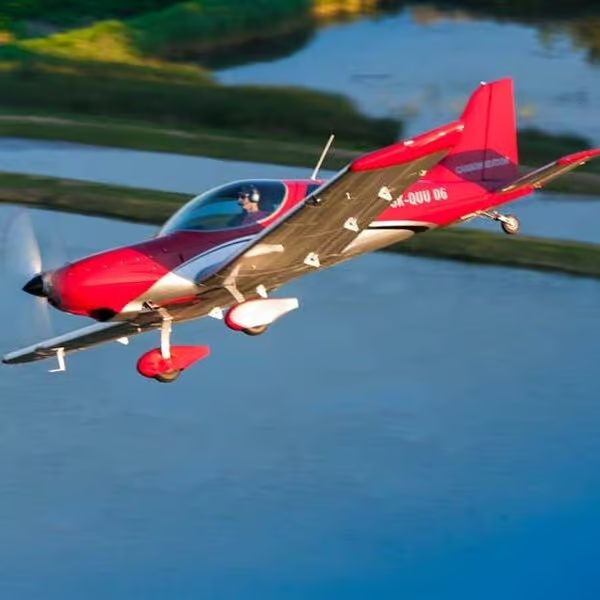
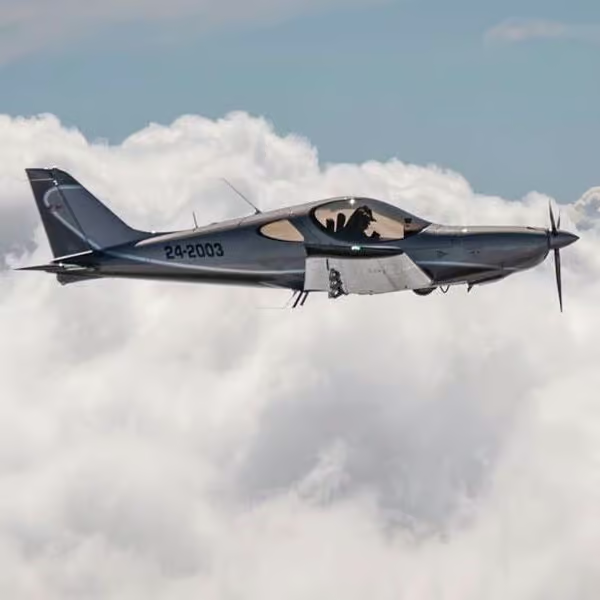
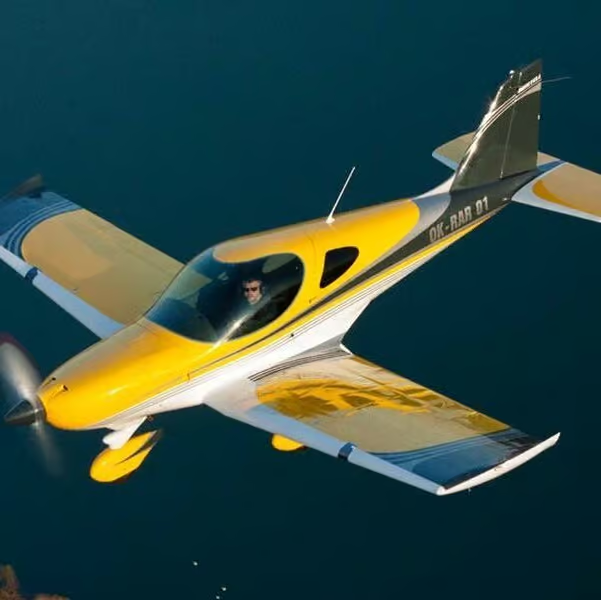
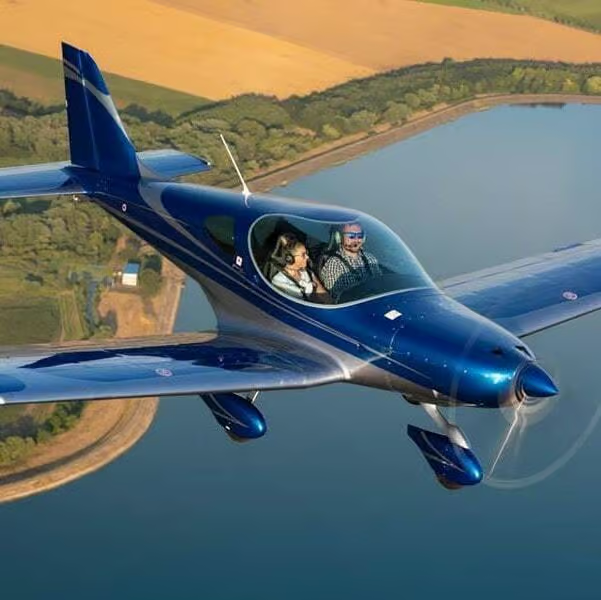
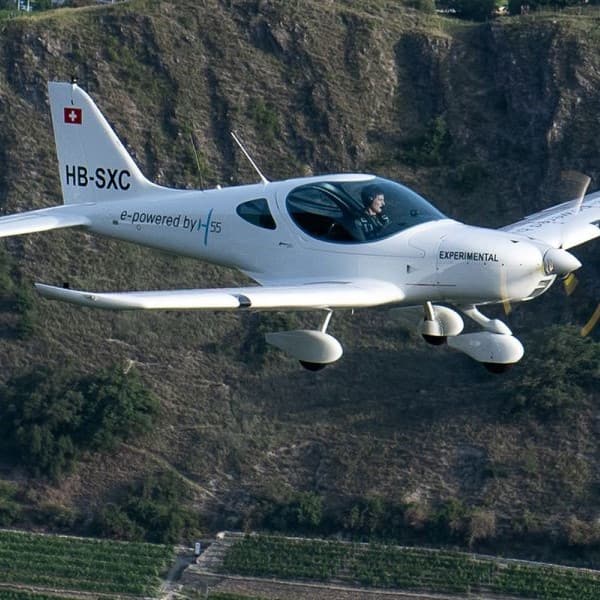
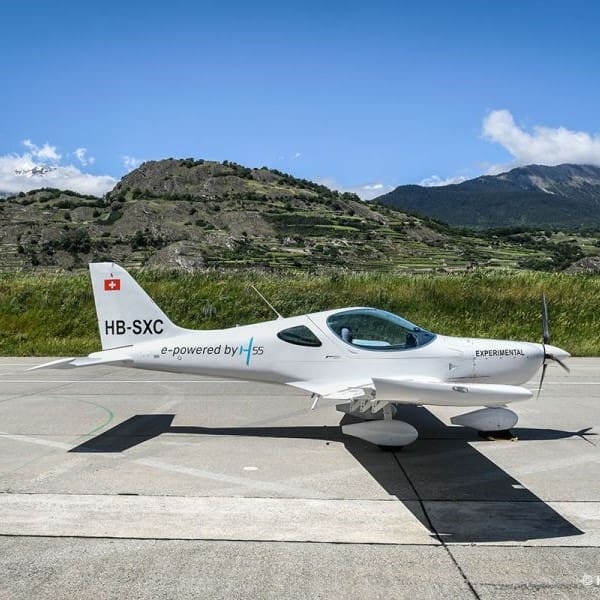
Powered by H55’s electric propulsion system and manufactured by BRM Aero, the Bristell Energic is H55’s next client based commercial application. The 2-seater fully electric airplane will be certified CS-23 to be used for pilot training and flight schools, starting in 2021.
Description
Powered by H55’s electric propulsion system and manufactured by BRM Aero, the Bristell Energic is H55’s next client based commercial application. The 2-seater fully electric airplane will be certified CS-23 to be used for pilot training and flight schools, starting in 2021
BRISTELL B23 ENERGIC TECHNICAL DATA
Dimensions:
Wing span – 9.27 m
Aircraft length – 6.58 m
Aircraft height – 2.36 m
Performance:
Standard mission at MTOW: 6 school circuits, equivalent to a standard 1-hour flight school program with 30min reserve at cruise power, ISA+ 10°C
Maximum take-off weight – 850 kg
Payload – 190 kg
Climb rate at max. power – 800 feet/min
Stall speed – 87 km/h / 45 Kts (as tested in the current prototype)
Max cruise speed (at MCP) – 200 km/h / 110 Kts
Charging time/flight time – 1/1 in standard conditions
Electric energy cost for 1-hour flight – $7 (at 20 cents/kWh)
Equipment:
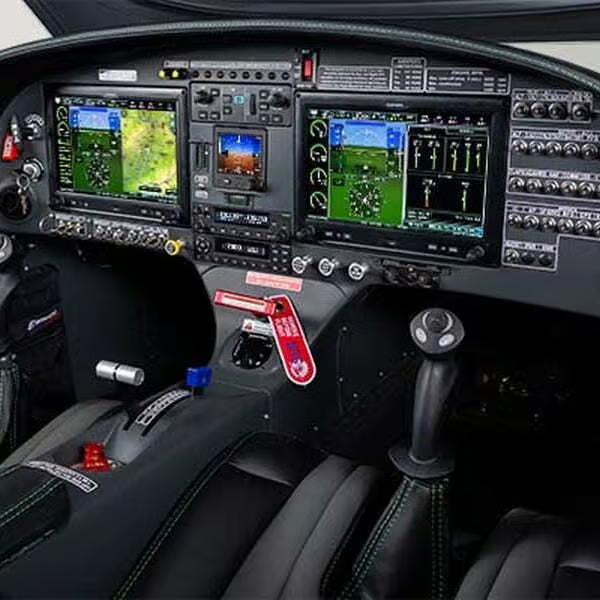
Dual H55 Motor and Energy display
Flight display – Dual Garmin G5, Attitude, Airspeed, Altitude, Side Slip and Magnetic Heading incl. backup battery
Radio – Garmin GNC 225A
Transponder with GPS – Garmin GTX 345R
Angle of attack indicator – Garmin GI 260
Flight controls on sticks
RPM, Clock and Volt/Amperemeter indicators
Electric Propulsion System:
Single electric motor (MTOP 100 kW / MCP 80 kW), liquid cooled
49 kWh rechargeable lithium batteries distributed in 2 permanently installed packs for redundancy.
Normal use: 1000 cycles, normal operations
Warning panel for vital battery and propulsion parameters
Multifunction display for energy and power management
Propeller: DUC Hélices 3-blade propeller Certified FLASH-R (as tested in the current prototype)
Charging Requirements (for max. performance and efficiency)
Input voltage – 3 phase 400V 50Hz
Input current – 32A or 63A (charging time depends on charger power)
Output voltage – 800V
Possibility to adapt to any EV charger station satisfying above conditions