


Glider Training



















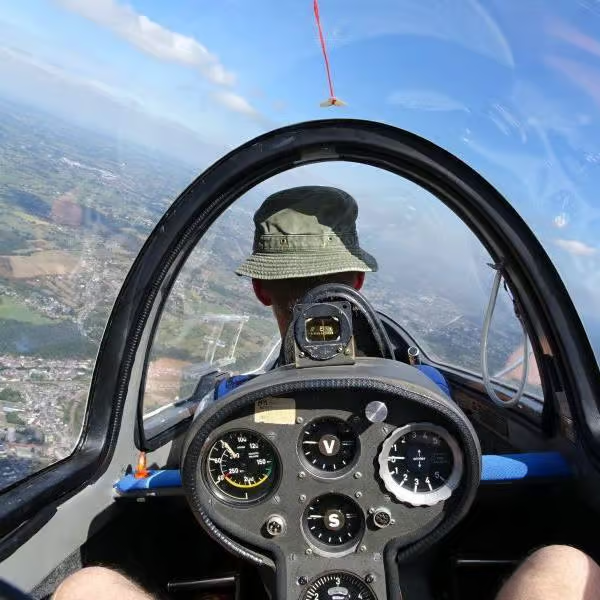


Sourcing Glider Training
Glider training provides pilots with the knowledge, handling skills and operational awareness required to fly sailplanes safely and efficiently in both recreational and competitive environments. Whether you are beginning ab initio gliding lessons, progressing towards solo standard, developing cross-country soaring skills or converting powered pilots into glider operations, the providers listed on AvPay offer access to glider training schools, certified instructors and structured soaring programmes. Listings may include winch launch instruction, aerotow training, advanced soaring development, instructor coaching and gliding club training services designed to support pilots across all stages of sailplane progression.
Helpful Hints when Booking Glider Training
✈ Ask whether the training organisation operates winch launch, aerotow or self-launch operations, as launch method exposure can influence overall pilot development.
✈ Confirm the condition, maintenance standards and fleet availability of the training gliders to ensure reliable flying continuity throughout your training programme.
✈ Check whether instructors hold recognised gliding instructional qualifications and remain active in operational soaring, cross-country or competition environments.
✈ Review how weather cancellations, launch queue management and seasonal operations may affect training continuity and expected progression timelines.
✈ Consider whether the club or school provides structured theoretical instruction covering meteorology, soaring techniques, airspace and operational safety procedures.
✈ Ask about opportunities for advanced development such as thermal soaring, ridge flying, cross-country coaching and badge or licence progression support.
✈ Ensure the provider offers suitable insurance guidance, membership structures and launch cost transparency before committing to long-term training.
✈ Speak with current members or students regarding instructor availability, operational culture and aircraft access during busy weekend flying periods.
What to Consider when Choosing a Provider
When selecting a glider training provider, evaluate instructor experience, aircraft availability, launch methods, operational standards and the overall training structure offered by the organisation. Reliable providers should maintain well-supported training fleets, clear progression pathways and safe operational procedures aligned with recognised gliding practices. Factors such as seasonal flying opportunities, airfield location, weather conditions and launch infrastructure can significantly influence training efficiency and pilot experience. Through AvPay listings, users can contact providers directly via phone, email or WhatsApp and can also click the organisation’s name to explore their full company profile, additional training services and operational capabilities.
Market your Glider Training Services on AvPay
AvPay provides glider training organisations and soaring clubs with a professional platform to showcase instructional services, gliding courses and specialist sailplane development programmes to a global aviation audience. Providers can promote training capabilities, launch methods, instructor expertise and operational facilities while generating direct enquiries from pilots actively searching for glider training opportunities. Listings also improve visibility across specialist aviation training categories and help organisations present their services clearly to prospective students and club members.
➤ List your Company and Services on AvPay
Frequently Asked Questions when Searching for Glider Training
✈ How long does glider training usually take?
Training duration depends on weather conditions, flying frequency, launch availability and student progression, although regular flying significantly improves continuity.
✈ What launch methods are used during glider training?
Most gliding schools operate winch launch, aerotow or both, depending on airfield infrastructure and operational requirements.
✈ Can powered aircraft pilots transition into gliding?
Yes, many providers offer conversion training for powered pilots, focusing on energy management, soaring techniques and glider-specific handling.
✈ Is glider training weather dependent?
Yes, gliding operations rely heavily on wind conditions, cloudbase, visibility and safe soaring weather throughout the training day.
✈ What qualifications can be gained through glider training?
Training can lead to solo standards, recognised gliding licences, cross-country endorsements and instructor progression pathways.
✈ Do gliding clubs provide training aircraft?
Most clubs and training providers operate dedicated training gliders for student instruction and supervised solo operations.
✈ What skills are most important in glider training?
Energy management, lookout discipline, weather interpretation and coordinated aircraft handling are all fundamental gliding skills.
✈ Can glider training support future airline careers?
Many professional pilots value gliding experience because it develops aircraft handling precision, situational awareness and decision-making skills.
Transitioning from Powered Aircraft to Gliders
Moving from powered aircraft into gliders gives pilots a completely different understanding of energy management, aerodynamics and aircraft handling precision. Many powered pilots are surprised by how quickly gliding sharpens lookout discipline, approach planning and weather interpretation. Without an engine available to correct poor decisions, glider flying encourages accurate judgement from the earliest stages of training. The transition process is usually straightforward for experienced pilots, although it requires adapting to quieter cockpits, higher sink awareness and different launch and circuit procedures.
Key Operational Differences
✈ Powered pilots often need time to adapt to flying without throttle control, where every circuit, descent and positioning decision depends entirely on managing height and energy correctly.
✈ Glider approaches are generally flown with greater emphasis on accuracy because there is no opportunity for a powered go-around once committed to landing.
✈ Lookout scanning becomes even more critical in soaring environments, particularly when operating near thermals, ridge lift areas and busy gliding circuits.
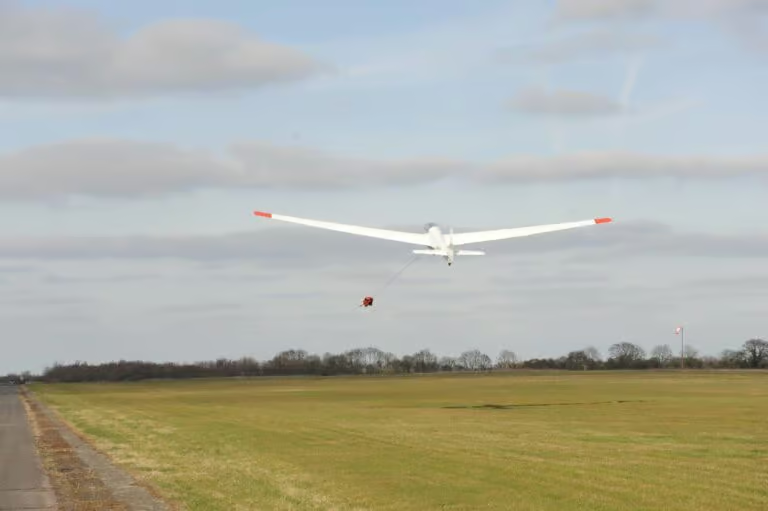
✈ Launch procedures differ significantly from powered operations, with pilots commonly training on winch launches, aerotows or self-launch sailplanes depending on club operations.
✈ Weather interpretation shifts towards identifying usable lift sources, including thermals, wave systems and ridge conditions rather than purely avoiding poor weather.
✈ Gliders respond efficiently to coordinated control inputs, meaning powered pilots often refine rudder coordination and develop smoother handling techniques over time.
✈ Radio usage in gliding can be more concise than in powered aviation, especially at non-controlled sites where visual awareness and standard procedures are heavily relied upon.
✈ Many airline and military pilots use gliding to maintain raw flying accuracy because sailplanes reward anticipation, planning discipline and precise aircraft control.
Why Gliding Improves Overall Pilot Skills
Gliding develops a pilot’s ability to think ahead of the aircraft while continuously evaluating terrain, weather, airspace and landing options. Powered pilots transitioning into sailplanes frequently improve their understanding of lift, drag, coordinated flight and energy conservation in ways that directly enhance their broader flying standards. The experience also strengthens situational awareness and promotes calm decision-making under pressure. For many professional pilots, gliding remains one of the purest forms of aviation training available.