


Flight Simulator Training













Sourcing Flight Simulator Training
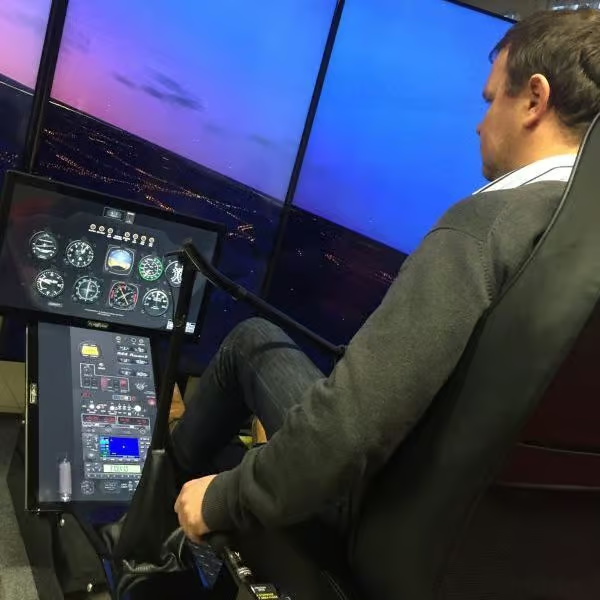
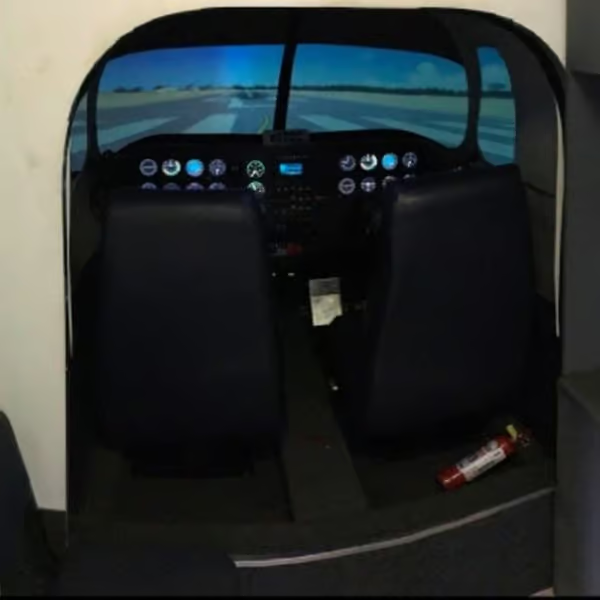
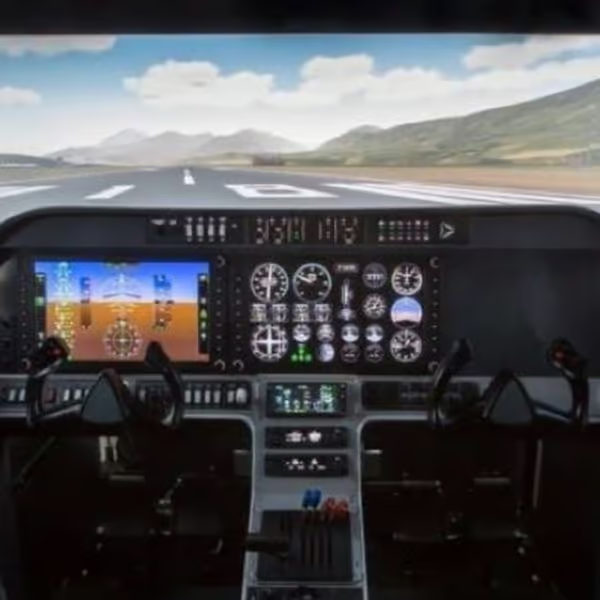
Flight simulator training allows pilots, students and aviation professionals to practise aircraft procedures, emergency scenarios, instrument flying and crew coordination within a controlled training environment. From fixed-base procedural trainers through to advanced full-motion airline simulators, flight simulator training plays a major role in both private and commercial aviation development. Whether you are preparing for an instrument rating, airline assessment, recurrent checks or simply improving cockpit confidence, the providers listed on AvPay offer a wide range of simulator-based aviation training services. This page helps users find professional flight simulator training providers offering realistic cockpit environments, experienced instructors, aircraft-specific familiarisation and tailored simulator sessions across general aviation, business aviation and airline platforms.
Helpful Hints when Booking Flight Simulator Training
✈ Before booking simulator training, confirm whether the device is certified for loggable training hours or intended purely for familiarisation and practice.
✈ Choose a simulator that closely matches your aircraft type, avionics suite and operating procedures to maximise the value of the training session.
✈ If preparing for an instrument rating or skills test, ask whether the instructor has recent operational or examiner experience in that environment.
✈ Motion simulators improve immersion during upset recovery and handling exercises, but fixed-base devices can still deliver highly effective procedural training.
✈ Bring your own checklists, approach plates and cockpit flows where possible so the simulator session mirrors your real-world operating environment.
✈ Ask providers whether scenarios can be customised to include abnormal procedures, weather diversions, engine failures or low-visibility approaches.
✈ Multi-crew simulator sessions work best when both pilots understand standard operating procedures, communication flows and CRM principles beforehand.
✈ Simulator availability can become limited during airline assessment periods and winter training seasons, so booking early is often worthwhile.
What to Consider when Choosing a Provider
When selecting a flight simulator training provider, focus on simulator realism, instructor experience, aircraft type accuracy and whether the training aligns with your specific operational goals. Some providers specialise in airline MCC and jet orientation training, while others focus on GA instrument flying, helicopter procedures or business aviation operations. Consider simulator certification standards, visual quality, software currency, instructor qualifications and flexibility when tailoring scenarios. Turnaround time, session length and access to briefing facilities can also affect the overall experience. Users can contact providers directly through phone, email or WhatsApp via their listings and can click the organisation’s name to explore their full company profile, available simulators and additional aviation services.
Market your Flight Simulator Training Services on AvPay
AvPay gives flight simulator training providers direct exposure to a global aviation audience actively searching for pilot development, recurrent training and simulator-based aviation experiences. Whether your organisation specialises in airline simulator sessions, GA procedural trainers, helicopter simulators or advanced instrument instruction, AvPay provides a professional platform to showcase your capabilities and generate targeted enquiries. Providers can present simulator specifications, supported aircraft types, instructor expertise and training packages clearly while benefiting from visibility across a growing international aviation marketplace.
➤ List your Company and Services on AvPay
Frequently Asked Questions when Searching for Flight Simulator Training
✈ Can flight simulator training count towards pilot licences?
Some certified simulators can contribute towards licence and rating requirements, depending on the authority, aircraft category and simulator approval level.
✈ What is the difference between fixed-base and motion simulators?
Motion simulators recreate aircraft movement physically, while fixed-base simulators remain stationary and focus on cockpit procedures and handling practice.
✈ Is simulator training useful for private pilots?
Yes, simulators are widely used by private pilots for instrument procedures, emergency drills, navigation practice and confidence building.
✈ Can beginners use professional flight simulators?
Many providers welcome beginners and tailor sessions around introductory flying, aviation familiarisation and guided cockpit experiences.
✈ What aircraft can I train on in a simulator?
This depends on the provider, but many offer airliner, business jet, helicopter and general aviation simulator platforms.
✈ How realistic are modern flight simulators?
High-end simulators replicate cockpit systems, aircraft performance, weather conditions and airport environments with impressive accuracy.
✈ Can simulator sessions include emergencies and failures?
Yes, instructors can normally introduce system failures, weather complications and abnormal scenarios safely within the simulator environment.
✈ Do I need previous flying experience before booking?
No, many simulator providers offer sessions suitable for complete beginners as well as experienced pilots and airline crews.
Simulator Training for Instrument Rating Preparation
Simulator training is one of the most effective ways to prepare for an instrument rating because it allows pilots to practise procedures, decision-making and workload management without the pressure of live weather or aircraft operating costs. A well-structured simulator session can replicate instrument departures, holds, approaches, missed approaches, radio navigation, autopilot use and abnormal situations in a controlled environment. For pilots working towards an IR, CB-IR or IR(R), simulator preparation helps build confidence, accuracy and procedural discipline before moving skills into the aircraft.
✈ Use simulator sessions to practise scan technique, altitude control, heading accuracy and power management before adding more complex procedural tasks.
✈ Rehearse standard instrument departures, arrivals, holds and approaches so cockpit flows feel familiar before training in the live aircraft.
✈ Ask the instructor to introduce realistic workload, including radio calls, weather changes, route amendments and unexpected ATC instructions.
✈ Practise missed approaches regularly because they test aircraft control, decision-making, navigation awareness and procedural discipline under pressure.
✈ Use current charts, approach plates, checklists and briefing techniques so the simulator session closely reflects real instrument flight operations.
✈ Include partial panel, equipment failures and autopilot issues where appropriate, as these scenarios develop stronger instrument flying resilience.
✈ Review each session properly afterwards, focusing on altitude deviations, tracking errors, approach stability and decision points rather than just completion.
✈ Confirm whether simulator time can be credited towards your rating, as this depends on the training organisation, simulator approval and licence pathway.
The greatest value of simulator training comes from repetition and review. Pilots can pause, reset and repeat difficult procedures until the technique becomes consistent, which is far harder to achieve efficiently in the aircraft. When combined with good instruction and realistic scenarios, simulator preparation can reduce stress, improve accuracy and make aircraft-based instrument training far more productive.