


Drones For Sale















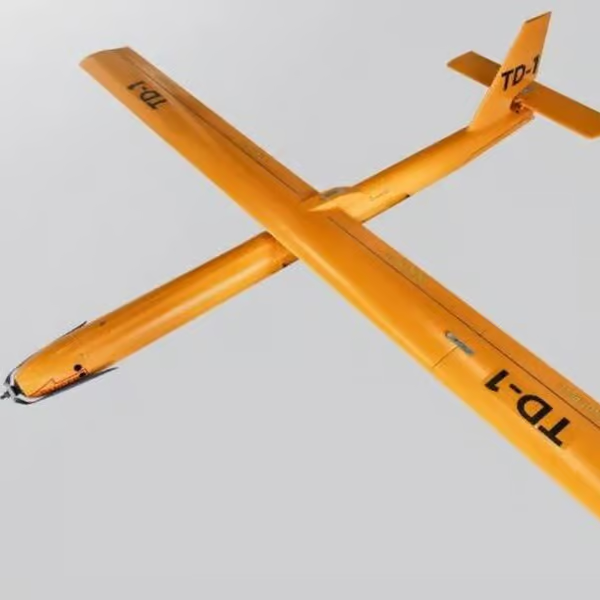
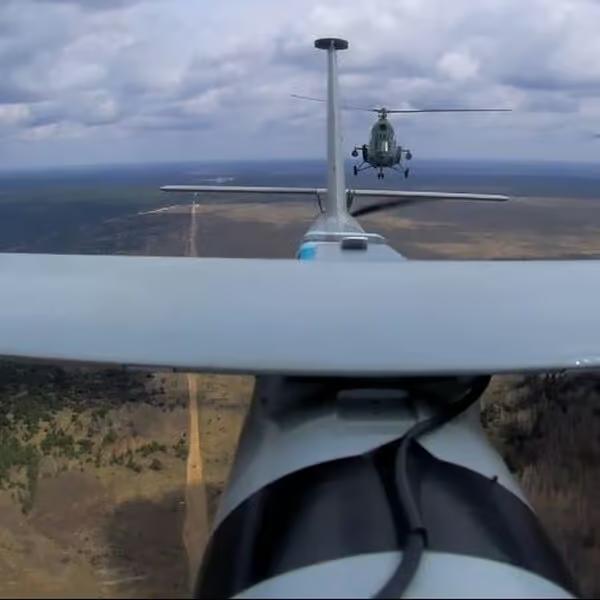


Sourcing Drones and UAVs
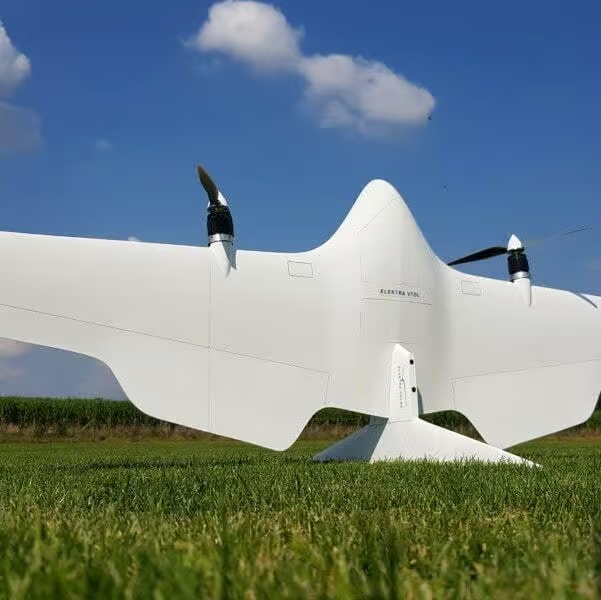
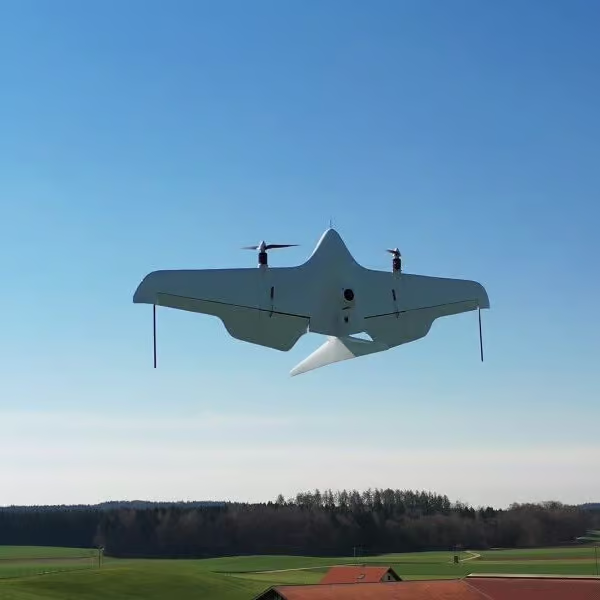
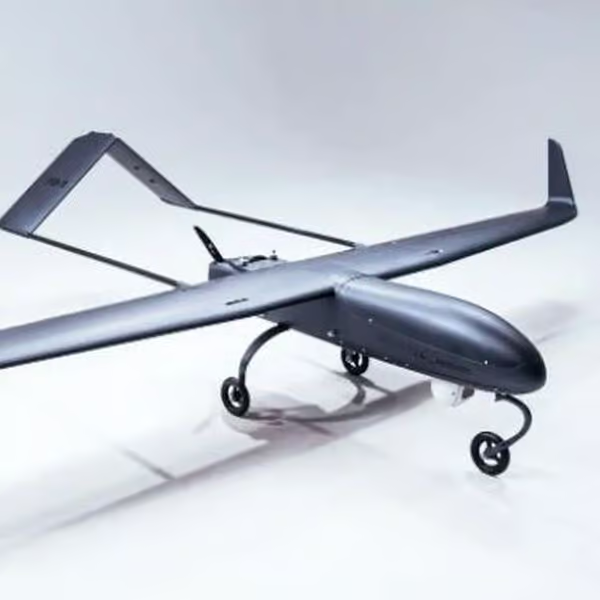
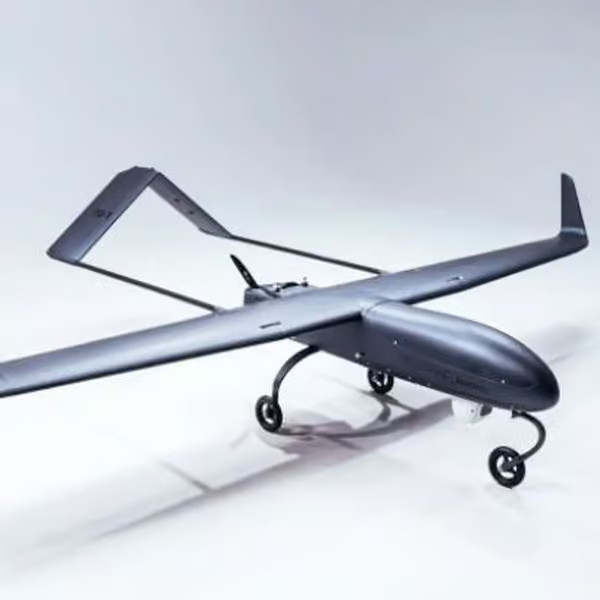
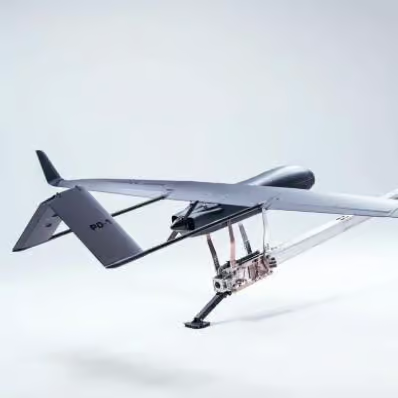
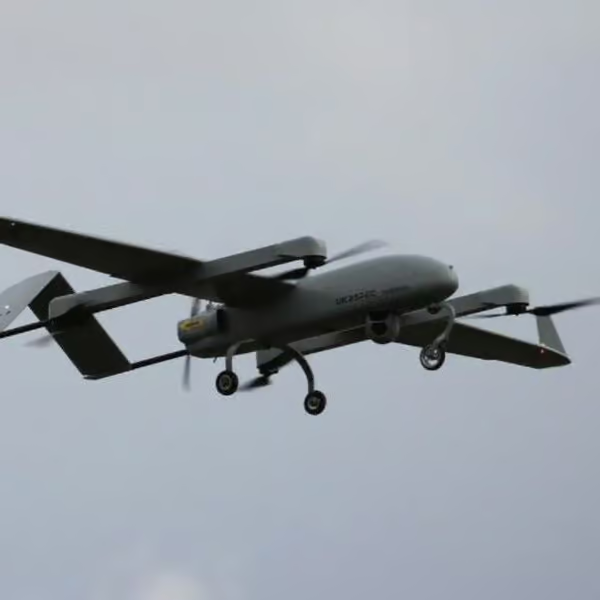
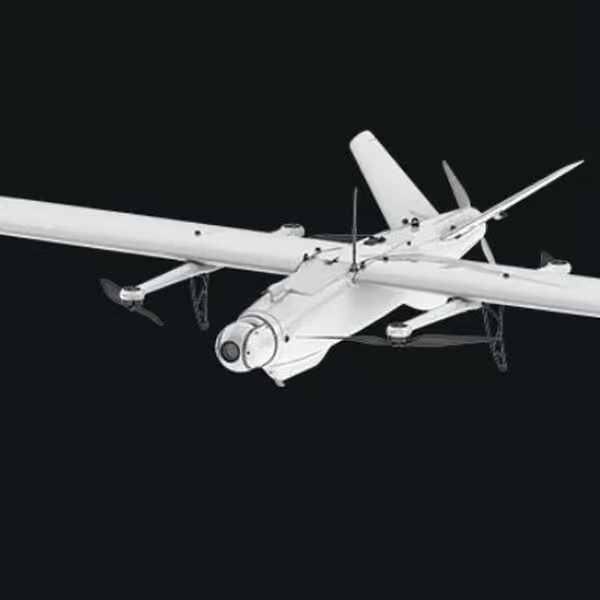
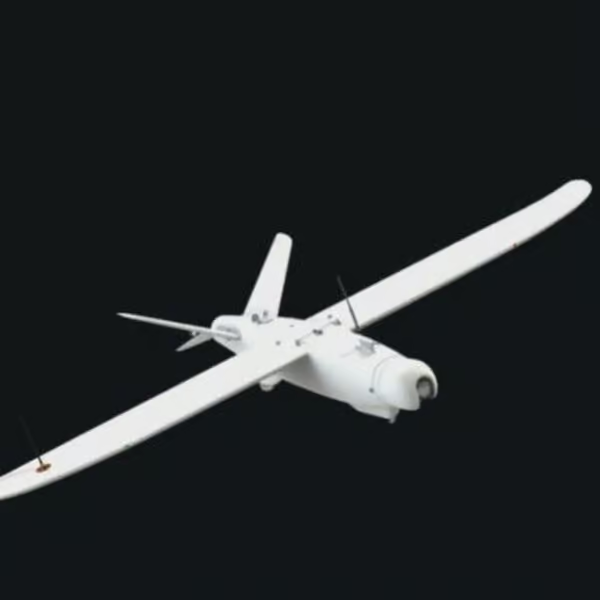
Drones and UAVs (Unmanned Aerial Vehicles) are widely used across commercial, industrial and aviation sectors for applications including aerial surveying, inspection, mapping, surveillance and logistics. If you are sourcing drones and UAVs, you are in the right place, as this marketplace connects you with specialist suppliers offering platforms ranging from compact multirotor systems to advanced fixed wing and hybrid UAV solutions. Providers on AvPay offer aircraft designed for professional operations, with varying payload capacities, endurance capabilities and sensor integrations, allowing you to select systems that align precisely with your operational requirements and regulatory environment.
Helpful Hints when Sourcing Drones and UAVs
✈ Define your mission profile clearly, including flight duration, payload requirements and operational environment before selecting a UAV platform.
✈ Choose between multirotor and fixed wing systems based on whether you prioritise manoeuvrability or long endurance flight performance.
✈ Verify payload compatibility to ensure the UAV can safely carry sensors such as LiDAR, thermal cameras or mapping equipment.
✈ Assess battery performance and power systems carefully, particularly for operations requiring extended flight time or remote deployment.
✈ Check compliance with local aviation regulations including registration, licensing and operational limitations for UAV use.
✈ Evaluate data transmission range and reliability to ensure stable control and live data feed during mission critical operations.
✈ Consider ease of maintenance and availability of spare parts to minimise downtime and support long term operational use.
✈ Review software integration capabilities, including mission planning tools and data processing compatibility with your workflows.
What to Consider when Choosing a Provider
When selecting a supplier for drones and UAVs, focus on platform reliability, technical specifications and the provider’s experience in supporting professional aviation operations. Consider factors such as lead times, aftersales support, training availability and access to spare parts or upgrades. Ensure the supplier understands regulatory compliance and can advise on airspace integration where required. AvPay listings allow you to contact providers directly via phone, email or WhatsApp and by clicking the organisation’s name, you can explore their full profile, helping you assess their capabilities and broader UAV offerings before making a decision.
Market your Drones and UAVs on AvPay
If you supply drones and UAV systems, listing on AvPay gives your business direct exposure to aviation professionals actively sourcing aircraft for commercial and operational use. You can showcase detailed specifications, highlight unique capabilities and demonstrate your expertise across different UAV platforms. A strong listing supports inbound enquiries, builds credibility and positions your organisation within a global aviation marketplace focused on serious buyers.
➤ List your Company and Services on AvPay
Frequently Asked Questions when Searching for Drones and UAVs
✈ What is the difference between a drone and a UAV?
Drone is a general term, while UAV refers specifically to unmanned aircraft systems used in professional or regulated operations.
✈ Which UAV type is best for long range missions?
Fixed wing UAVs are typically preferred due to their superior endurance and efficient aerodynamic performance.
✈ Can UAVs carry specialised sensors?
Yes, many platforms are designed to carry payloads such as LiDAR, thermal imaging cameras and high resolution mapping sensors.
✈ Do I need a licence to operate a UAV?
In most regions, commercial UAV operations require certification and compliance with aviation authority regulations.
✈ How long can a typical UAV stay airborne?
Flight time varies widely, with multirotors often lasting under an hour and fixed wing systems reaching several hours.
✈ What factors affect UAV performance?
Payload weight, weather conditions, battery capacity and system design all influence overall performance and endurance.
✈ Are spare parts readily available?
Most professional suppliers provide spare parts and support packages to ensure ongoing operational reliability.
✈ Can UAVs be customised for specific missions?
Yes, many platforms can be configured with different payloads, software and hardware to suit specific operational needs.
Multirotor vs Fixed Wing UAV Comparison
Choosing between a multirotor and fixed wing UAV depends on mission profile, operating environment, payload requirements and endurance expectations. Both platforms have strong use cases, but they perform very differently in the field. Understanding these differences helps operators select the right aircraft for surveying, inspection, mapping and wider commercial UAV operations.
Key Differences for Professional UAV Operations
✈ Multirotor UAVs offer vertical take-off and landing, making them ideal for confined sites, close inspection work and operations where runway space is unavailable.
✈ Fixed wing UAVs provide longer endurance and greater area coverage, making them well suited to mapping, agriculture, corridor surveys and large-scale land assessment.
✈ Multirotors can hover accurately, allowing operators to capture detailed imagery of structures, assets and inspection points from stable positions.
✈ Fixed wing platforms are more aerodynamically efficient in forward flight, reducing energy consumption and extending mission duration compared with most multirotors.
✈ Multirotor systems are generally easier to deploy quickly, with simpler launch requirements and strong suitability for mobile teams working across varied sites.
✈ Fixed wing UAVs often require more space for launch and recovery, unless using VTOL, catapult or assisted landing systems designed for constrained environments.
✈ Payload selection should guide platform choice, as multirotors suit heavier short-duration sensor work while fixed wing UAVs favour efficient long-range data collection.
✈ Many operators use both platform types, selecting multirotors for precision inspection and fixed wing UAVs for efficient coverage of wider operational areas.