


Night Rating













Sourcing Night Rating Training
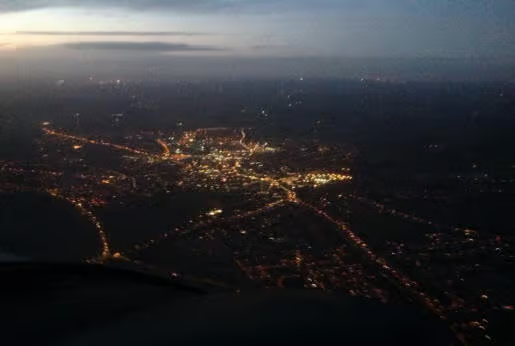
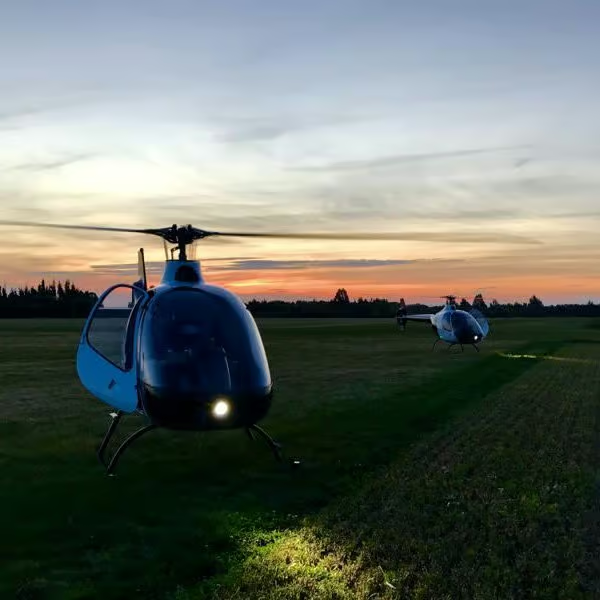
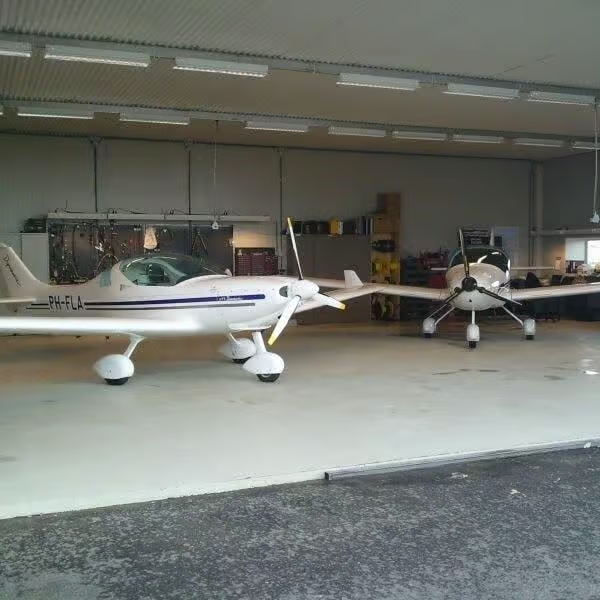
Night Rating training allows pilots to legally operate aircraft after sunset while developing the additional skills required for reduced visibility, night navigation and low-light flight operations. Whether you are searching for PPL Night Rating courses, night circuit training, cross-country night flying or commercial pilot progression support, you are in the right place. AvPay connects pilots with Approved Training Organisations, flight schools and specialist instructors offering Night Rating training across a wide range of aircraft and operational environments. Listings may also include instrument familiarisation, night currency training and advanced operational coaching for private and commercial pilots.
Helpful Hints when Sourcing Night Rating Training
✈ Choose a provider operating from a well-equipped aerodrome with reliable runway lighting and active night operations to maximise training continuity and realism.
✈ Ask whether the course includes practical navigation exercises beyond local circuits, as cross-country night flying builds stronger operational confidence and awareness.
✈ Review instructor experience carefully, particularly if you intend to use the Night Rating as part of commercial or instrument flying progression.
✈ Check aircraft lighting equipment and cockpit layout before booking, as poor cockpit illumination can increase workload during early night operations.
✈ Consider seasonal daylight hours when planning training, especially during summer periods where late sunsets can affect scheduling flexibility.
✈ Ensure your daytime handling and radio communication skills are current before commencing Night Rating training to reduce unnecessary cockpit workload.
✈ Ask whether the provider incorporates basic instrument reference exercises, as night flying often increases reliance on cockpit instruments and attitude awareness.
✈ Confirm expected training costs in advance including landing fees, night surcharges and aircraft hire charges to avoid unexpected operational expenses.
What to Consider when Choosing a Provider
When selecting a Night Rating training provider, assess the operational environment, aircraft suitability and instructor experience available within the programme. Important considerations include runway lighting quality, local airspace complexity, aircraft avionics and the provider’s ability to deliver consistent night flying opportunities throughout the year. Pilots should also evaluate whether the course includes practical navigation exercises and realistic operational exposure beyond basic circuits. AvPay listings allow users to contact providers directly via phone, email and WhatsApp to discuss aircraft availability, seasonal scheduling and course structure. You can also click on the organisation’s name to view their full company profile, wider training services and additional aviation capabilities.
Market your Night Rating Training Services on AvPay
AvPay helps aviation training organisations, flight schools and instructors promote Night Rating training services to private and commercial pilots worldwide. A professional listing allows your organisation to showcase aircraft fleets, night operational capability, instructor expertise and airfield facilities while generating direct enquiries from pilots seeking advanced flight training. Whether you provide initial Night Rating courses, night currency training or commercial pilot progression support, AvPay offers a credible platform to increase visibility within the professional aviation training market.
➤ List your Company and Services on AvPay
Frequently Asked Questions when Searching for Night Rating Training
✈ What is a Night Rating?
A Night Rating allows pilots to legally operate aircraft during night conditions after completing approved night flying instruction and training requirements.
✈ Who can complete Night Rating training?
Private and commercial pilots holding the appropriate licence category can normally complete Night Rating training subject to authority requirements.
✈ What does Night Rating training involve?
Training commonly includes night circuits, navigation exercises, take-offs, landings and operational procedures in reduced lighting conditions.
✈ Can Night Rating training improve instrument awareness?
Yes, night operations increase reliance on cockpit instruments and attitude reference, helping pilots strengthen instrument scanning discipline.
✈ How long does a Night Rating course take?
Course duration depends on weather, daylight hours, aircraft availability and individual student scheduling flexibility.
✈ Which aircraft are commonly used for Night Rating training?
Most providers use standard single-engine training aircraft such as the Cessna 172 or Piper PA-28 equipped for night operations.
✈ Is a Night Rating required for airline progression?
Night flying experience is commonly expected during commercial pilot development and may support wider professional training progression.
✈ How do I compare Night Rating providers on AvPay?
You can compare aircraft fleets, runway lighting facilities, instructor experience and operational environments through provider listings and profiles.
Common Challenges During Night Flying
Night flying introduces a very different operational environment compared with daytime VFR operations. Reduced visual references, increased reliance on instruments and rapidly changing visibility conditions can increase pilot workload significantly, especially for less experienced night pilots.
✈ Reduced visual references
Dark terrain, limited horizon definition and sparse ground lighting can make attitude awareness and height judgement far more difficult than during daylight operations.
✈ Visual illusions
Pilots may experience false horizons, black hole approaches and misleading runway perspective illusions which can affect approach stability and situational awareness.
✈ Greater reliance on instruments
Night operations often require stronger instrument scanning discipline because external visual cues may be limited or unreliable in low-light conditions.
✈ Weather deterioration can be harder to detect
Cloud layers, lowering visibility and fog development may become more difficult to identify at night, particularly away from populated areas and illuminated airfields.
✈ Fatigue and reduced concentration
Late operating hours, reduced visibility and increased mental workload can contribute to fatigue, slower decision-making and reduced situational awareness.
✈ Navigation challenges
Identifying landmarks and maintaining positional awareness can become more difficult at night, especially during cross-country flights over remote or coastal areas.
✈ Emergency landing limitations
Suitable forced landing areas are much harder to identify at night, increasing the importance of route planning, altitude management and aircraft reliability awareness.
✈ Higher cockpit workload
Managing lighting systems, radio communication, navigation and aircraft control simultaneously can increase workload during departures, arrivals and circuit operations.