


Flight Instructor Courses

















Sourcing Flight Instructor Courses
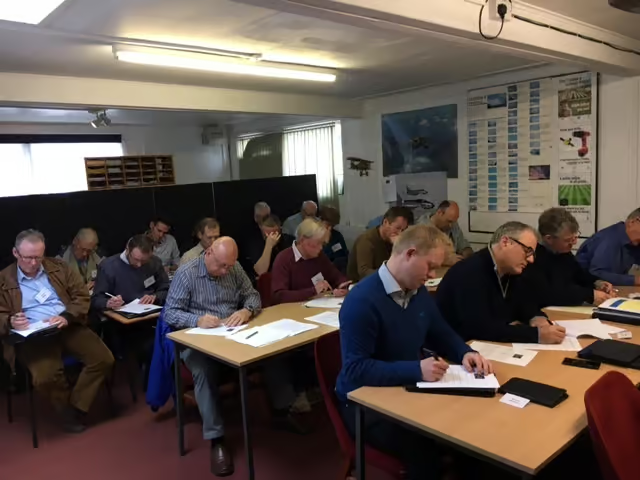
Flight Instructor Courses listed on AvPay help qualified pilots progress into aviation training and instructional careers through certified FI, CFI and instructor rating programmes. These courses are designed for pilots looking to develop teaching skills, improve technical knowledge and gain the qualifications required to train future pilots in both practical flying and theoretical aviation subjects. Providers featured on AvPay may offer aeroplane, helicopter or advanced instructor training programmes covering briefing techniques, instructional flight exercises, human factors, lesson planning, student assessment and regulatory requirements. Whether building long-term aviation careers or expanding operational qualifications, pilots can compare professional Flight Instructor Course providers directly through the platform.
Helpful Hints when Sourcing Flight Instructor Courses
✈ Confirm the course provider is approved by the relevant aviation authority and authorised to deliver recognised Flight Instructor qualifications and assessments.
✈ Review minimum entry requirements carefully, including total flight hours, licence privileges, medical validity and required theoretical knowledge examinations.
✈ Ask how much of the training is conducted in aircraft versus simulators, particularly if you want stronger real-world instructional experience.
✈ Consider the provider’s reputation for graduate employment opportunities, especially if your long-term goal is airline, academy or freelance instruction work.
✈ Review the instructor-to-student ratio carefully, as smaller training groups often provide more personalised coaching and better instructional feedback.
✈ Check whether accommodation, training materials, examination fees and aircraft hire costs are included within the advertised course pricing.
✈ Ensure the provider offers structured preparation for both instructional technique assessments and the final Flight Instructor skill test requirements.
✈ Ask whether the course includes teaching practice with real students, as practical instructional exposure is critical for building confidence as an instructor.
What to Consider when Choosing a Provider
When selecting a Flight Instructor Course provider, consider their approval status, training aircraft availability, instructor experience and graduate success rates within the aviation industry. Some schools specialise in modular instructor training while others offer integrated pathways linked to commercial pilot programmes. Course structure, scheduling flexibility, weather reliability and simulator access may also affect training continuity and completion times. It is also important to review how much emphasis is placed on teaching techniques, student management and practical instructional experience rather than simply passing assessments. Through AvPay, users can contact providers directly via phone, email or WhatsApp and can click the organisation’s name to view their full training profile and additional aviation services.
Market your Flight Instructor Courses Services on AvPay
AvPay helps Flight Instructor Course providers increase visibility within the global aviation community by connecting training organisations with pilots actively searching for instructor qualifications and aviation career development opportunities. Listing your training services on AvPay allows you to showcase your facilities, aircraft fleet, instructor experience and course structure while generating direct enquiries from pilots looking to progress into professional aviation instruction roles.
➤ List your Company and Services on AvPay
Frequently Asked Questions when Searching for Flight Instructor Courses
✈ What is a Flight Instructor Course?
A Flight Instructor Course trains qualified pilots to teach flight training exercises, aviation theory and operational procedures to student pilots.
✈ What licences are required before starting Flight Instructor training?
Requirements vary by authority, although most providers require a CPL or higher licence alongside minimum flight hour requirements.
✈ How long does a Flight Instructor Course normally take?
Course duration depends on training intensity and weather conditions, although many programmes are completed within several weeks or months.
✈ Can Flight Instructor training be completed part-time?
Some providers offer flexible or modular programmes allowing pilots to complete instructor training alongside other operational commitments.
✈ What subjects are covered during instructor training?
Training normally includes instructional techniques, lesson planning, human factors, flight demonstrations and student assessment methods.
✈ Are simulators used during Flight Instructor Courses?
Many providers incorporate simulator sessions to support procedural teaching, instructional practice and scenario-based aviation training.
✈ Can Flight Instructor qualifications lead to airline careers?
Yes, many commercial pilots use flight instruction to build flight hours, operational experience and professional aviation knowledge.
✈ How can I contact Flight Instructor Course providers on AvPay?
Users can contact training providers directly through AvPay using the phone, email or WhatsApp options listed on profiles.
Common Challenges During FI Training
Flight Instructor training is widely regarded as one of the most demanding stages of professional pilot development. Unlike previous flight training where the focus is primarily on personal flying performance, FI training requires pilots to explain, demonstrate and assess every exercise to instructional standards while maintaining safe aircraft operation throughout. Many pilots quickly discover that being technically capable in the cockpit does not automatically translate into being an effective instructor. Understanding the most common challenges during FI training can help pilots prepare properly and improve their chances of completing the course successfully.
Balancing Flying and Teaching Simultaneously
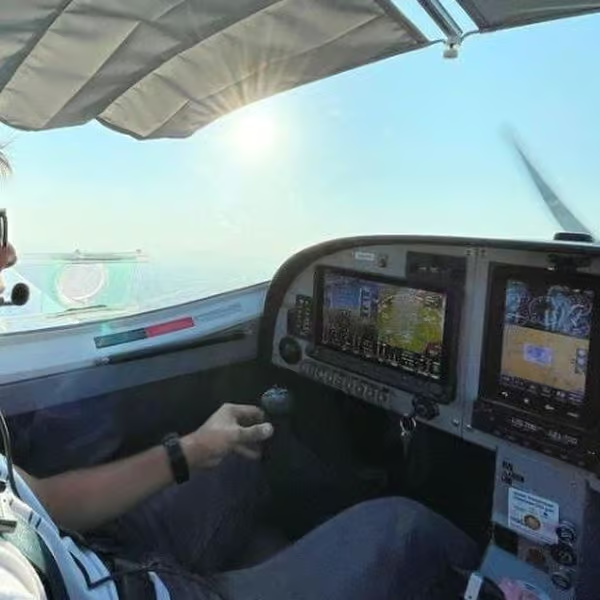
One of the biggest challenges during FI training is learning to fly while teaching at the same time. Instructor candidates must maintain accurate aircraft control, monitor safety and communicate clearly throughout every manoeuvre. Delivering briefings and airborne explanations while remaining ahead of the aircraft workload often takes considerable practice, particularly during more complex exercises such as stalls, navigation or emergencies.
✈ Many FI students initially struggle with instructional patter, particularly when trying to explain exercises clearly while maintaining accurate aircraft handling.
✈ Demonstrating manoeuvres smoothly and consistently can become difficult when candidates are also monitoring student reactions and safety considerations.
✈ Some pilots find it challenging adapting their communication style to suit different student personalities, confidence levels and learning speeds.
✈ Managing workload during airborne instruction often becomes more demanding than expected, especially during emergencies, navigation exercises or circuit training.
✈ FI candidates frequently underestimate the amount of lesson preparation and technical study required outside normal flying hours during the course.
✈ Receiving continuous critique from supervising instructors can feel mentally exhausting, particularly for pilots unused to constant performance evaluation.
✈ Weather delays and aircraft availability issues can interrupt training continuity, making it harder for some students to maintain instructional progress.
✈ Many trainees struggle initially with maintaining patience and professionalism when students repeatedly make the same operational mistakes.
Developing Effective Instructional Techniques
FI training places significant emphasis on teaching ability rather than simply technical aviation knowledge. Candidates are expected to structure lessons professionally, identify student weaknesses and deliver constructive feedback without creating unnecessary pressure. This often requires pilots to develop communication and leadership skills that were not heavily tested during previous licence training. Learning how to simplify complex aviation concepts while remaining technically accurate is another major part of becoming an effective instructor.
Building Confidence as a Future Instructor
Confidence develops gradually throughout Flight Instructor training, particularly as candidates begin conducting longer briefings and practical teaching exercises independently. Most trainees experience periods of frustration or self-doubt during the course, especially when instructional progress feels slower than expected. However, consistent preparation, strong study habits and accepting constructive feedback professionally normally lead to steady improvement. Pilots who complete FI training successfully often describe it as one of the most rewarding and valuable stages of their aviation career development.